

“Why is a patch test important?” – a question we wish all our clients thought to ask before booking a treatment – because the simple truth is that patch testing is a no-brainer: it helps protect your skin, your health, and your final result.
At Cosmetic Tattoo Studio Brisbane Face Figurati, run by Uliana Kasperska, we’ve learned the hard way just how crucial proper patch testing is – just how easily it can stop you from ending up with horrendous reactions, including contact dermatitis and more severe allergic contact dermatitis. It’s not an optional bit – it’s a basic requirement for safe cosmetic tattooing and top-notch beauty treatments.
And honestly, skipping it is a bit like going in for a hair colour transformation without checking if your hair can handle bleach – crazy, avoidable, and only invites trouble.
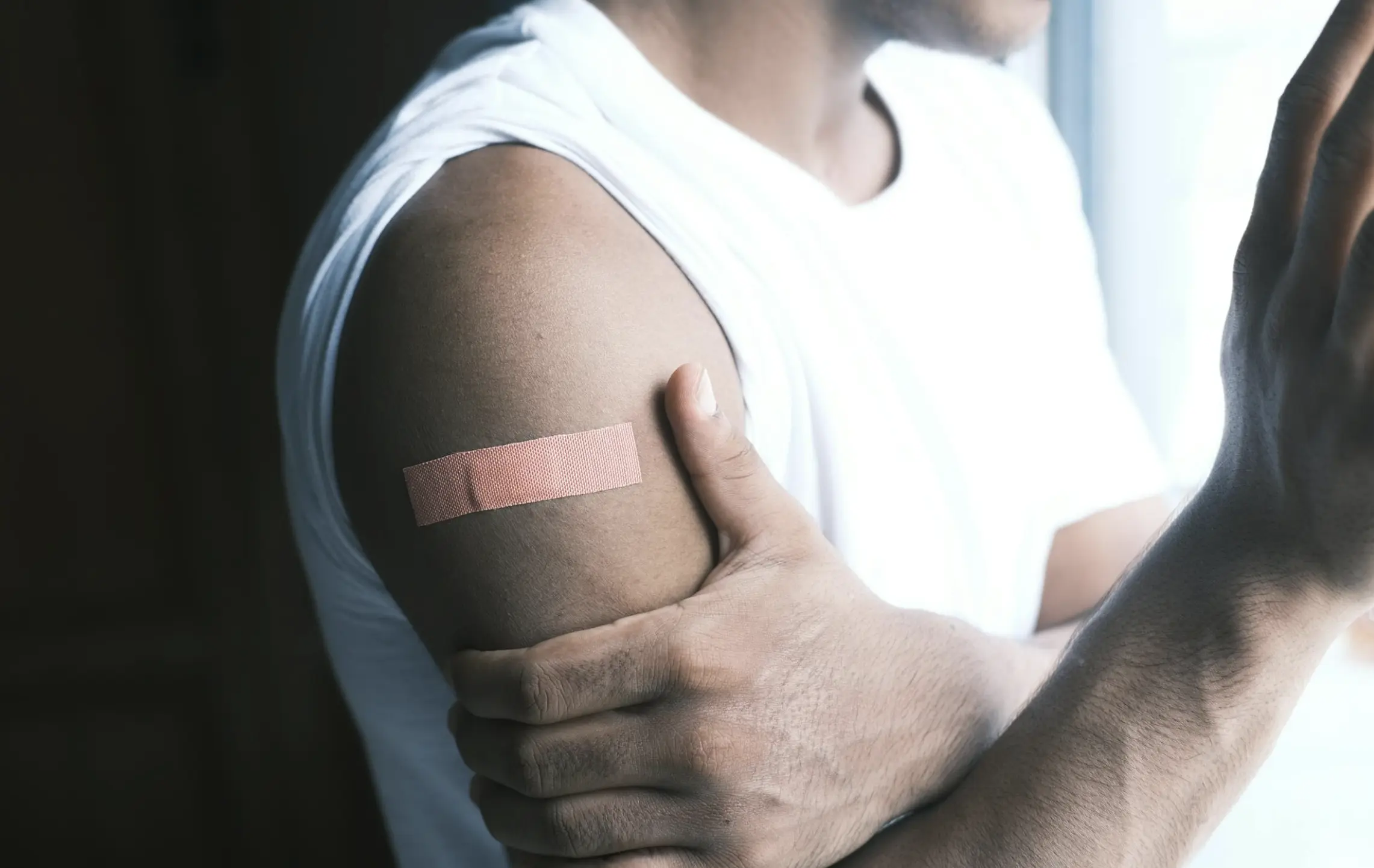
A patch test is just a tiny application of pigment, adhesive, or product applied to a controlled test area (usually the back of the ear or inner arm) 24–72 hours before your treatment.
It might seem simple, but it’s all built on the same principles as allergy patch testing in a clinical setting – where doctors identify what’s causing hypersensitivity reactions in people.
Here’s what it can pick up on:
We follow a similar system to the medics’ – identify potential problems first, treat afterwards. We don’t do full medical testing in our studio, but the logic’s the same.
We’ve seen it happen with clients who thought a simple eyebrow tint in Brisbane would be no big deal – only to discover they were sensitive to the tint ingredients. That’s why we never skip this step.

Brisbane skin behaves totally differently. No getting around it.
Humidity, UV exposure and heat can hammer your skin barrier, making it more likely to react to skin irritants and increasing the chances of patch test reactions.
This means:
We sometimes see what’s known as an “angry back reaction” pop up when the skin’s under environmental stress. In Brisbane, sun exposure and sweating can trigger it quickly.
Even treatments that seem gentle – like lash tint treatments and brow lamination in Brisbane – can cause issues if your skin is sensitised.

We had a client booked in for a lip blush – good skin, no known allergies, should’ve been straightforward.
Patch test? 48 hours later, mild swelling and redness – classic signs of contact dermatitis.
So instead of pushing on, we:
Result? Smooth healing, even colour, and no complications.
We’ve seen similar cases after dermaplaning facials or a hydrafacial treatment, where the skin barrier was compromised, making patch testing even more critical.
Let’s be straight – skipping patch testing is where problems begin.
Immediate reactions can include:
Delayed reactions:
Long-term issues:
Research shows that contact dermatitis is a major concern with exposure to certain cosmetic ingredients, even in small amounts.

| Stage | Timeframe | What Happens | What You Should Do |
|---|---|---|---|
| Application | Day 0 | Product applied using adhesive patches | Keep area clean and dry |
| Early Check | 24 hours | Early patch test reactions may appear | Avoid touching |
| Full Assessment | 48–72 hours | Delayed reactions develop | Monitor closely |
| Clearance | After 72 hours | Safe to proceed if no reaction | Book treatment |
At Cosmetic Tattoo Studio Brisbane Face Figurati, patch testing is a major part of our consultation process.
Here’s what happens:
We follow proven safety protocols because your skin deserves more than guesswork.

Before testing, your skin needs to be in a stable condition, which is exactly same to how you prep your skin before any cosmetic procedure:
Avoid:
Do:
Aftercare is just as important as the test itself.
Do:
Don’t:
We always provide support if anything unexpected happens.
“I’ve had treatments before — I don’t need it” – Different products = different risk factors.
“Hypoallergenic means risk-free” – Not true – reactions can still happen with sensitive skin.
“Reactions happen straight away” – Many reactions are delayed by 24–72 hours.
“It’s just a formality” It’s a critical safety step, not a checkbox.
Trust is everything to us in the beauty industry – and it shows in the extra steps we take.
Patch testing is all about showing our clients we’ve got their backs. It means we’ve learned the hard way what happens when we don’t do it, that we actually know what we’re talking about when it comes to skin reactions, that we’ve got the right protocols in place, and that we genuinely care about people’s safety.

In Brisbane, the cost of patch testing usually falls into one of two categories:
Let’s be clear – skipping it just to save a bit of time is not worth the risk. Fixing any adverse reactions that come up afterwards can cost a whole lot more.
Patch testing might seem like a tiny little extra step – but to us, it’s the bit that actually protects all the rest of the work we do.
In fact, from all our experience here at Cosmetic Tattoo Studio Face Figurati, the best results come from being careful and taking the time to do things right – rather than rushing and taking shortcuts on the way. Whether you’re getting a tattoo, some brow work done, or even just a simple tint, your skin is worth taking care of.

Since 2016, Anastasia has worked in the professional tattooing and aesthetic industry in Brisbane, placing strong emphasis on safety and preparation before any procedure. As a certified and licensed specialist with qualifications across Europe and Australia, she ensures every client undergoes proper patch testing where required.
Her approach focuses on identifying potential allergic reactions, protecting the skin barrier, and ensuring treatments are carried out safely, supporting predictable healing and reliable, long-term results.
We like to do it 48-72 hours before your appointment so you can see if any delayed reactions pop up.
We stop right in our tracks, take a closer look and then adjust whatever we need to, just to make sure everything is safe and okay for you.
We strongly recommend it for cosmetic tattooing, tinting and lamination services – these are the kinds of treatments that we see getting people into trouble most often.
Watch out for redness, itching, swelling or a rash – these are all signs of contact dermatitis.
Now and then, you might get a false positive, but even then, it’s still worth doing the test to reduce the overall risk of anything going wrong.