How should post-procedure healing differ in humid Queensland versus dry Victoria? Of course, the specifics of your healing will still depend on your treatment, but the climate can be a real game-changer when it comes to managing moisture, sweat, heat and sun exposure. In Queensland, the heat and humidity can mean you need to keep a closer eye on your perspiration levels, whereas in Victoria, the dryness can make skin tightness and flaking more noticeable.
Here at Cosmetic Tattoo Studio Brisbane Face Figurati, we take the climate into account when we’re laying out your after-care instructions, but we don’t let it override the specific needs of your procedure. The same is true for clients who have a cosmetic tattoo in Brisbane treatment. We believe recovery should reflect both the specifics of the procedure and the realities of the everyday environment.
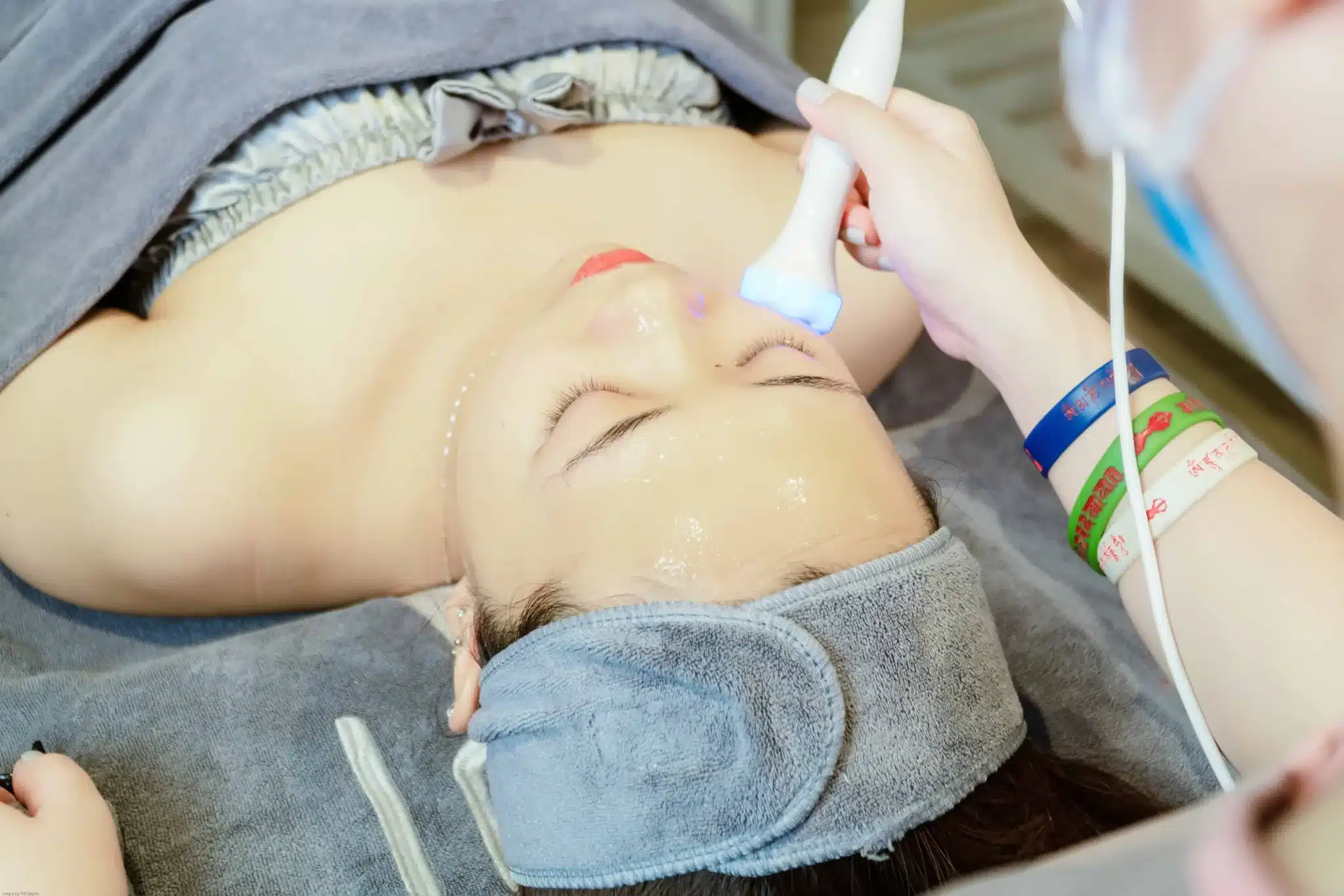
When you get microneedling or similar treatments, you’re temporarily disrupting the skin barrier, allowing water and other substances to pass through more easily. This differs from what happens with surgical or chronic wounds, so don’t expect to follow the same wound care protocols for cosmetic treatments.
In one study, researchers played around with 0.15mm and 0.25mm needles — applying them 5 or 10 times, then checking out the skin — looking at how much water was getting lost through the skin (that’s what they call Transepidermal Water Loss or TEWL), how hydrated the skin was, and how red it looked. They did all this before and after the treatment, and for 3 whole days afterwards. And what they found was that the skin barrier recovered within 3 days — easy. But here’s the thing: this isn’t some magic time that applies to everyone. Needle size, how many times you use it, how intense the treatment is, and just how you respond to it — all these things can make your healing time different.
TEWL is one of the measures used to assess how well your skin retains water. But here’s the catch: measurements like this are super sensitive to the humidity, temperature, and airflow around you, not to mention your skin temperature and how much you sweat. So when it comes to the relationship between climate and recovery, it’s a lot more complicated than “dry air = more water loss”.

Clinical research indicates that humidity can influence stratum corneum water content, elasticity, roughness, and dry-skin symptoms. Reviews have nevertheless found conflicting results regarding the relationship between climate and TEWL, with no clear consensus that any single humidity level is universally better for barrier function.
Recovery after procedures that create controlled skin injury involves overlapping biological processes rather than one single “healing event”. Climate is only one environmental influence, so Queensland should not be considered inherently better for recovery, nor should Victoria be considered inherently worse.
Your immediate environment can matter more than your state. Someone in Brisbane may spend much of the day in air-conditioned spaces; someone in Victoria may encounter humid weather. Heating, air conditioning, wind, temperature and activity all alter the conditions around recovering skin. Research has also linked low-humidity environments to changes in skin barrier function and increased susceptibility to mechanical stress.
Procedure type matters as well. Recovery after a hydrafacial in Brisbane treatment may differ considerably from recovery after skin needling or cosmetic tattooing, as these procedures affect the skin barrier in different ways.
In warm, humid weather, the practical challenge is often the combination of heat, perspiration and repeated handling of sensitive skin.
Sweat can leave a treated area feeling damp, which may encourage repeated wiping or washing. That friction can add unnecessary irritation to already sensitive skin.
During the procedure-specific restriction period:
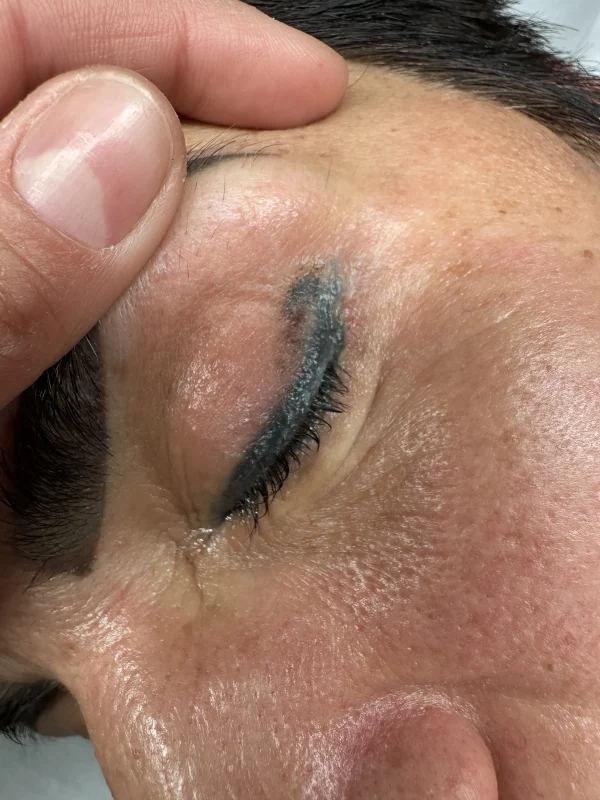
This can be particularly relevant after an eyebrow tattoo in Brisbane, as forehead perspiration may encourage repeated wiping around the brows.
Keeping the treated area appropriately clean and following the prescribed aftercare also helps avoid unnecessary contamination. Cosmetic aftercare, however, should not be confused with clinical treatment of an infected wound.
High humidity does not make moisturiser unnecessary. Medical research into moist wound environments should not be interpreted as an instruction to keep cosmetically treated facial skin continuously wet or heavily occluded.
Several thick layers may feel excessive on warm, perspiring skin; a simpler approved routine may be more comfortable. After a lip tattoo in Brisbane, moisture and product use should still follow the specific treatment protocol rather than the weather alone.

Low humidity and lower temperatures have been associated with changes in skin barrier function and increased susceptibility to mechanical stress. Other research links stratum corneum water content to normal flexibility and desquamation.
None of this proves that Victorian weather slows biological healing. It does, however, help explain why recently treated skin may feel drier or tighter.
Cool wind, indoor heating and low humidity can make post-treatment tightness more noticeable. The appropriate response is neither to deliberately “dry out” the skin nor, at the other extreme, keep it heavily occluded.
Instead:
With eyebrow tattoo aftercare, the goal is appropriate barrier support and protection of the healing area rather than simply applying the heaviest possible moisturiser.
The most useful adjustments are practical rather than procedural: manage excess heat and sweat in humid conditions, and give more attention to dryness and barrier comfort in drier environments.
| Aftercare factor | Humid Queensland conditions | Drier Victorian conditions |
| Main practical concern | Heat, perspiration and repeated wiping | Tightness, dryness and environmental exposure |
| Cleansing focus | Manage sweat without over-cleansing | Avoid stripping dry-feeling skin |
| Moisturising | Appropriate support without unnecessary layering | Additional attention if dryness increases |
| Product texture | Lighter approved textures may feel more comfortable | More emollient support may be comfortable |
| Indoor environment | Air conditioning can still create dry conditions | Heating may intensify dryness |
| Exercise and heat | Sweat can be difficult to avoid | Procedure-specific restrictions still apply |
| Healing timeline | Primarily treatment-dependent | Primarily treatment-dependent |
| Sun exposure | Minimise during recovery | Minimise during recovery |
The same treatment-first logic applies when clients ask does wireless low vibration equipment actually reduce healing time: equipment or environmental conditions shouldn’t be assumed to shorten the prescribed healing protocol without appropriate evidence.
Australian sun exposure remains relevant regardless of humidity. The Therapeutic Goods Administration advises taking extra care to protect skin from the sun in the days following microneedling and notes that redness may last for several days.
Follow procedure-specific instructions about direct sunlight and when sunscreen can be introduced. Hats, clothing and shade can reduce exposure without unnecessarily manipulating treated skin.
After an eyeliner tattoo in Brisbane, avoiding unnecessary rubbing is especially important when heat or perspiration makes the eye area uncomfortable.
During barrier recovery, also be cautious with:
Microneedling deliberately creates pathways through the skin barrier to facilitate delivery. A product tolerated on intact skin is therefore not automatically appropriate immediately after needling.


Rather than using separate Queensland and Victorian schedules, consider:
Treatment intensity → barrier condition → temperature and humidity → sweating → dryness or tightness → appropriate aftercare adjustment.
This avoids two opposite assumptions: that Queensland humidity eliminates the need for moisturising, or that Victorian dryness calls for heavy occlusion.
It also recognises that microchannel closure, measured barrier recovery and visible healing are not necessarily the same event. Experimental microneedle research has found that optimal timing varies depending on the microneedle system and whether the treated area is exposed or occluded. In one study using maltose microneedles, barrier measurements recovered within 3–4 hours and microchannels closed within 15 hours upon exposure to the environment, whereas occlusion delayed recovery by up to 72 hours. These figures describe that experimental system, not a universal cosmetic-treatment timeline.
Temporary redness, a bit of sensitivity, some tightness, and that annoying flaking we get from treatment can all be normal parts of the recovery process. The TGA has noted that after microneedling, redness can persist for several days, which is pretty par for the course.
But if you start to notice increased redness, your swelling is getting worse, you’re in pain more often, there’s discharge, or you’re experiencing other symptoms you didn’t expect, don’t brush it off as just the weather. Give your treating practitioner a call – and if they think it’s needed, get in touch with a healthcare professional too, just to check everything out.

There isn’t much evidence that Qld’s humidity is a magic healing pill. Yes, humidity does affect the skin in lots of ways, but to be honest, the research on climate and TEWL is all over the shop.
Not as a rule. You might feel like layering on the moisturiser in humid conditions is a bit too much, but your skin still needs that barrier protection. Just choose a product that fits the requirements of your procedure.
Yes, it can. Indoor aircon can be a whole different world from the humid outdoors, and research has shown that low-humidity indoor environments can wreak havoc on dry-skin symptoms.
Not necessarily. Yeah, cool weather, wind and indoor heating can all make things a bit more uncomfortable, but instead of automatically going for a heavy product just because it’s winter, focus on the specific requirements of your procedure.
Not usually just because of the climate. What should determine your recovery timeline is the procedure itself. The climate’s just going to change how you manage sweating, dryness, what the indoor conditions are like, and that sort of thing.