

Do you have a ‘Patch Test’ protocol that specifically addresses red pigments? This is a question I get asked all the time by clients considering cosmetic tattoos, especially when considering treatments like lip blush or colour correction that use warmer, more vibrant pigment families.
I’m Anastasia, and I’ve spent years in the tattoo game. From this experience, I’ve come to realise that people worry about red pigments because of potential allergic reactions, the healing process, and how well their skin will tolerate them in the long term. At Cosmetic Tattoo Studio Brisbane Face Figurati, we make sure our clients understand the pros and cons of pre-treatment screening during the consultation, so they know they’re getting the full picture.
The bottom line is that there is no single Patch Testing protocol that can give you a definite yes-or-no answer about how your immune system will react to a particular pigment. However, some pretty effective screening methods can help spot potential issues before treatment even starts.

Red and warm-toned pigments have been reported in numerous medical reports on hypersensitivity reactions and contact dermatitis over the years. As a result, many clients assume that any red pigment is basically a ticking time bomb waiting to happen.
The truth is modern cosmetic tattoos use very high-grade formulations – including Iron oxide pigments and other approved colourants that are way safer than the products used a few decades back. But what really matters here is the individual, not the colour itself.
Modern tattoo pigments have to meet way higher safety standards than they used to. Still, every person’s immune system is different, so its ultimately going to come down to that.
A lot of clients think of patch testing as a straightforward pass-or-fail process, but its actually one of the various tools used to assess potential sensitivity before treatment even begins.
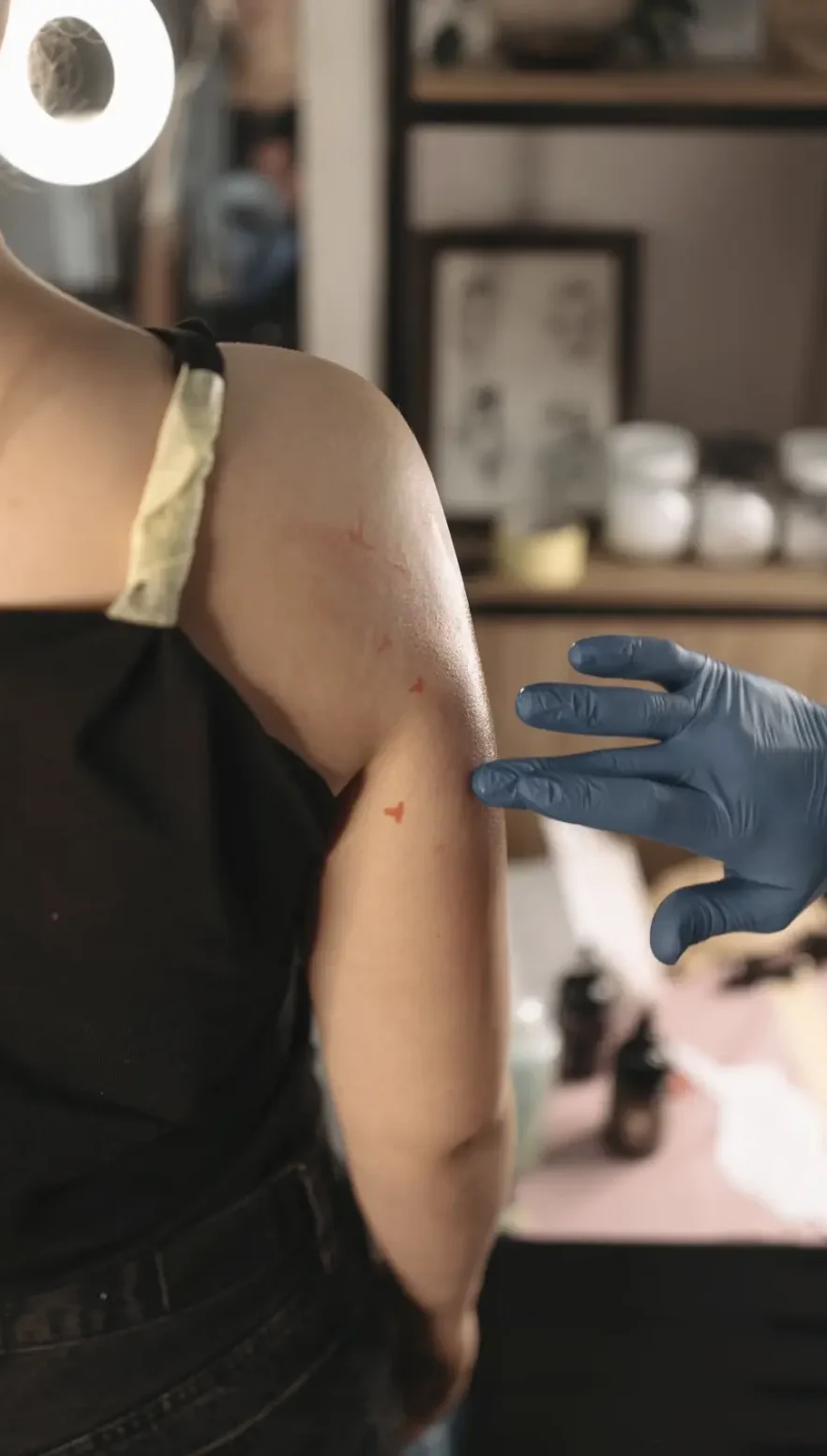
A test patch usually involves applying a small amount of the product to the skin and then checking for signs of a contact allergy, such as redness, itching, swelling, or irritation. Depending on the specific protocol, we might use hypoallergenic tape to keep the product in place while its being monitored.
| Testing Method | Purpose | Observation Period |
|---|---|---|
| Standard test patch | Screens for irritation | 24–48 hours |
| Pigment-specific screening | Checks sensitivity to ingredients | 48–72 hours |
| Photopatch testing | Assesses reactions involving ultraviolet light | Several days |
| Implanted test spot | Monitors delayed responses | Several weeks |
Even when results look perfectly normal, you can’t rule out an allergic reaction after treatment. There may still be a chance of an adverse reaction, even if your test has come out clear.
Testing the actual pigment that will be used is always a better bet than testing some generic colour sample.
Different manufacturers use different ingredients, stabilisers and carriers, so just because two red pigments look the same doesn’t mean they’ll behave in the same way.
The history of all the products your skin has reacted to can be pretty enlightening.
Past contact dermatitis, reactions to rubber chemicals, past allergic issues, or even sensitivity to cosmetics can all play a role in how we plan your treatment.
Factors such as skin tone and Fitzpatrick skin type can affect healing, colour retention, and pigment selection.
These factors don’t predict allergic reactions, but they do help practitioners choose suitable treatment approaches.
Many reputable pigment manufacturers provide Patient Information Leaflets that outline the ingredients, safety data, and recommended screening guidelines.
We take a close look at this kind of information so that both ourselves and our clients can make a more informed decision.
Reading up on Australian Family Physician publications and clinical literature indexed on Google Scholar suggests that pigment-related complications are pretty rare when you look at the number of procedures that get done every year.
But while they are uncommon, the reports that do pop up involving red pigments do seem to be happening more often than with other colours.
Research has highlighted:
The British Society for Cutaneous Allergy has also been doing some really valuable work on pigment-related sensitivities and skin reactions.
The bottom line is these reports are a reminder to be careful with screening, not a reason to be scared.
Brisbane’s climate creates some unique challenges. Humidity, UV exposure, outdoor lifestyles, and year-round sunshine can all influence how skin behaves before and after treatment.
One client visited our studio after experiencing reactions to multiple skincare products. Because her patient records indicated sensitivity concerns, we performed a patch test before treatment. The result was clear, and her procedure healed normally.
Interestingly, she had previously looked into eyebrow tinting services in Brisbane because she wanted a lower-commitment beauty option before considering cosmetic tattooing.
Another client experienced recurrent cold sores and was concerned about lip blush treatment. While cold sores are not an allergy, they require additional planning and preparation.
We also regularly see clients comparing cosmetic tattoo procedures with lash tint services when deciding which beauty treatment best suits their lifestyle and maintenance preferences.


Not every client needs patch testing, but some situations call for a more cautious approach.
If youve ever had an allergic reaction to something like cosmetics, hair dye, skincare products, adhesives – all that jazz – its worth mentioning it during your consultation.
If you have an immune system condition that might affect how your body reacts to treatment and then heals afterwards, then let’s discuss it.
If youve had any weird reactions to tattoos or cosmetic procedures in the past, you might want to do some extra checking before coming in for a treatment.
If youve got a bunch of documented sensitivities, it’s probably worth playing it safe and having a more conservative treatment plan.
One of the biggest misconceptions out there is that patch testing gives you a 100% guarantee of success. It doesn’t. Patch testing might give you some idea of what might go wrong, but it still can’t:
Think of it like one piece of a safety jigsaw puzzle.
Cosmetic tattooing only starts being safe when a qualified pro holds the machine; before that, its just a whole load of other safety measures that need to kick in.
We do a pretty in-depth consultation to have a good look at your risk factors and see if there’s anything we can do to make things safer for you. And guess what – its sometimes the stuff we talk about in the consultation that can help us figure out risks and issues more than the test itself does.
We always have a chat about UV exposure, sun damage and just general skin health. And if you’ve seen some changes in your skin that are making you worried, or you think you might have a bit of a skin issue, then get yourself to a doctor or a skin specialist to get it checked out – it wont matter if you do end up getting a cosmetic tattoo.
We like to pick colours from brands that are reputable and good at telling you what’s in them- it helps us make sure that your treatment is safe.
Clear instructions on how to look after yourself after treatment, and not making too many promises about how it’ll all turn out in the end, are key to getting good results.
Patch testing is generally inexpensive compared with the overall treatment investment.
| Service | Typical Brisbane Range (AUD) |
|---|---|
| Patch test consultation | $20–$80 |
| Cosmetic tattoo consultation | $50–$150 |
| Lip blush procedure | $450–$900+ |
| Correction work | $200–$800+ |
Clients frequently ask about the cost of lip neutralisation when researching corrective work for previous pigment procedures.
Most patch tests are assessed within a few days, though implant tests may need a longer watching period to be safe.
It’s rare for serious reactions to occur, but it’s always best to be prepared. If irritation sets in, treatment is justifiably postponed while we figure out the cause.
Depending on what’s happening, your practitioner may suggest you see a GP, do some extra allergy testing, consider alternative pigments, or delay treatment until things settle down. It really depends on how bad it is and what’s going on in your medical history.
In some correction cases, you might end up discussing the use of a saline pigment remover as part of a broader strategy, though that’s a whole separate thing from patch testing.
When clients ask if there’s a specific protocol for red pigments, I give the same balanced answer.
Patch testing, medical history checks, reviewing your patient file, and having a good chat all come together to help spot potential issues. However, no screening method can ever guarantee every possible reaction because everyone’s immune system is different.
In my experience, the safest outcomes come from using high-quality products, consulting thoroughly, having realistic expectations, and keeping the lines of communication open. The screening process is important, but it’s also what happens around it that really matters.

Since 2016, Anastasia has worked in the professional cosmetic tattoo industry in Brisbane, combining accredited training, practical experience, and recognised qualifications across Europe and Australia. As a certified and licensed specialist, she places a strong emphasis on client safety, pigment compatibility, and thorough pre-treatment assessment.
Her approach includes careful patch testing where appropriate, particularly when there is a concern about potential sensitivity to specific pigment colours or ingredients. By assessing individual skin responses and selecting high-quality pigments, she helps minimise the risk of adverse reactions while ensuring safe, predictable cosmetic tattoo results.
Possibly – but previous reactions certainly need to be discussed so we can figure out what precautions to take.
Many practitioners recommend waiting at least 48 to 72 hours after screening, though longer observation periods may be necessary in some cases.
If you have a history of cold sores, or tend to get a bit sensitive, then lip treatments do need a bit more careful planning.
Bring all the information you can – about any allergies, medications, previous cosmetic procedures and skin sensitivities you know about. The more we know, the better the treatment plan will be.
Absolutely. Your personal history, skin type and treatment goals all play a part in picking the right pigment and overall approach.