

“How does pigment interact with future laser skin treatments?” is probably at the top of the list of questions we get from clients thinking about cosmetic tattooing. And the simple answer is: yes, pigment can most definitely impact future skin work – and how it affects things depends on the type of pigment, your skin type & the type of laser tech being used.
At our studio, we’ve seen heaps of healed brows alongside skin rejuvenation treatments go down a treat – and also had to fix some brows that had changed colour after other places had got the planning wrong. That’s exactly why Uliana Kasperksa always makes sure to discuss future skin goals before the treatment even starts. If you’re thinking about any future skin resurfacing, pigmentation correction, or anti-ageing work, it really makes a difference to plan ahead.
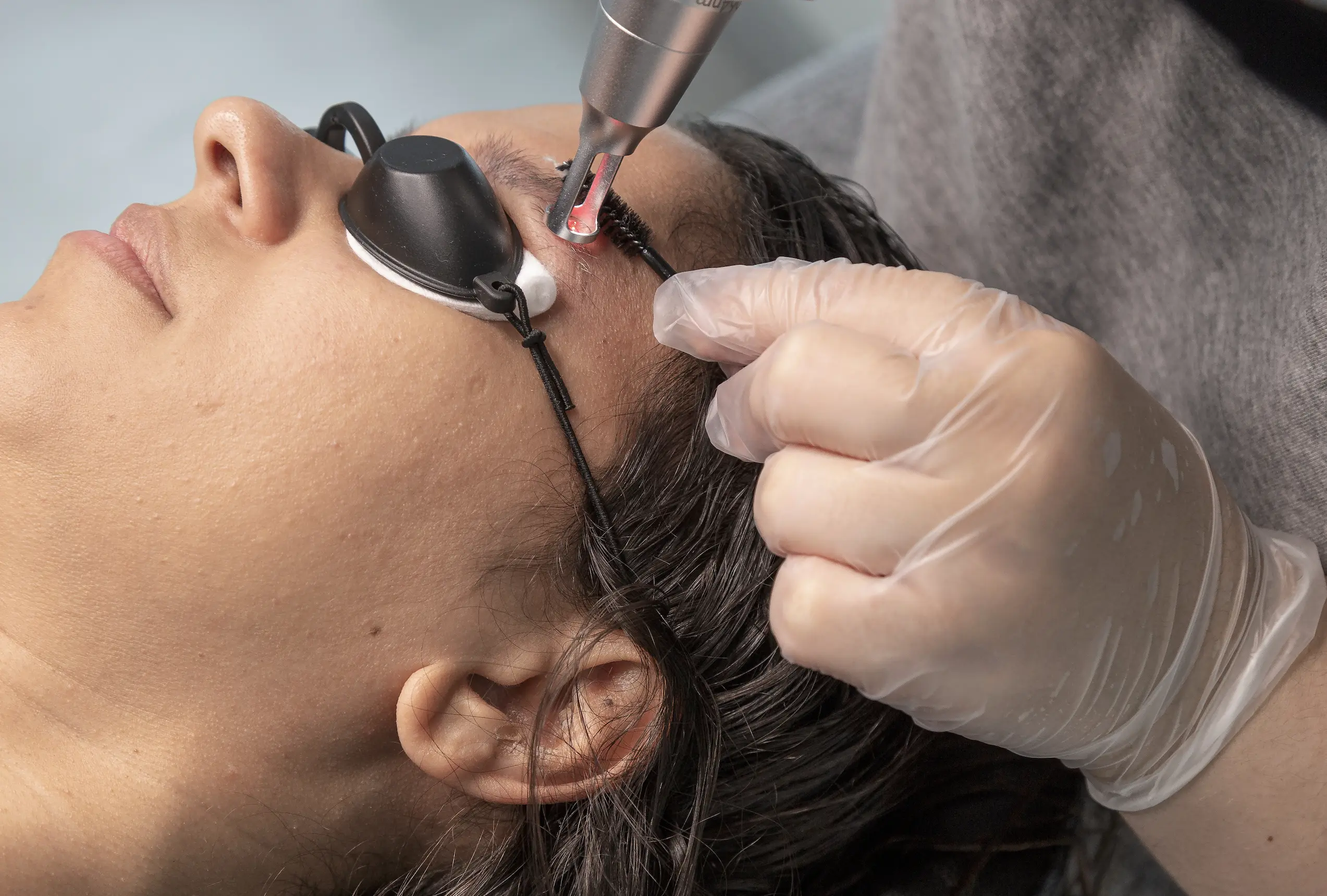
Before understanding pigment reactions, it helps to understand how does the laser enter the skin and why different wavelengths interact with colour differently.
Laser tech works by targeting the colour and heat in the skin layers & some pigments absorb that energy in different ways – which is why tattoos might fade, get darker or change colour after treatment. We’ve had clients come to us after having laser treatments elsewhere and finding that their brows had suddenly turned grey or orange – not because of anything we did, but because the clinic hadn’t taken the right precautions to protect the area.
Some of the most common devices being used include:
Generally, darker pigments absorb heat more readily. Pigments containing iron oxide or titanium dioxide can sometimes darken temporarily.
That’s just one of the reasons why experienced professionals like us will always ask you about:
Older cosmetic tattoos are often made up of outdated pigment blends particularly older lip neutralization tattoo work that may behave unpredictably during future treatments. In our Brisbane studio, we see our fair share of blue-grey brows that need fixing, faded lip blush & over-saturated pigment layers. If you have darker skin or a higher Fitzpatrick skin type, we’ve got to be extra careful, as these factors increase the risk of pigmentation changes and post-laser hyperpigmentation.
It’s a bit of a shock to clients, but certain pigments can oxidise during treatment. Instead of just fading straight away, they can look as if they’ve darkened or shifted in tone. For example:
| Pigment Type | Common Reaction | Risk Level |
|---|---|---|
| Carbon black | Grey fading | Moderate |
| Iron oxide pigments | Dark oxidation | Higher |
| Titanium dioxide blends | Charcoal shift | High |
| Organic hybrid pigments | Uneven fading | Moderate |
| Warm lip pigments | Patchy fading | Moderate |
At our studio, we once corrected microbladed brows that turned charcoal grey after IPL passed directly over saturated pigment. Situations like this are why proper patient education and patch testing matter.

Not every treatment is created equal – some are a breeze to use around healed cosmetic tattooing, while others demand a bit more caution when it comes to darker skin and problems with post-inflammatory hyperpigmentation.
Fractional lasers are a bit more gentle on the skin – they create micro-injuries to help rejuvenate the skin rather than blasting away at pigment. While laser tech has come a long way and can often work well with healed cosmetic tattooing, it still requires care with eyeliner tattoo and lip blush.
Fractional lasers create controlled micro-injuries to improve skin rejuvenation and skin texture rather than aggressively targeting pigment. These laser advancements can often be used safely on healed cosmetic tattooing when handled correctly, though eyeliner and lip blush still require extra care.
Pico Lasers and Q-switched lasers are often used to correct pigmentation issues and fade unwanted tattoo ink. That being said, aquarelle lip blush pigments can sometimes take on an orange hue during fading before settling down later. We always make sure to warn clients about this beforehand because colour changes can be pretty alarming if you’re not expecting them.
We know everyone thinks they know about the importance of sun protection, but honestly, Brisbane’s humidity and UV damage can really mess with healing more than most people give credit for.
Sun exposure can cause all sorts of problems, such as post-inflammatory hyperpigmentation, uneven fading, and irritation around older tattoo work.
Even the best cosmetic tattooing won’t survive if clients aren’t diligent about using broad-spectrum sunscreen and protecting their skin.
If you’ve got darker skin or a skin of colour, it’s generally best to stick with a qualified professional who has a good understanding of skin biology and safe treatment settings.
This is where the Fitzpatrick scale comes in – it helps us understand how different skin types will respond to things like inflammation, heat and pigment disruption.
And the truth is – even if you’ve seen someone else do a treatment that looks good, that doesn’t mean you’ll get the same result. Everyone’s skin is different, and that’s because it’s living, breathing tissue – not a template.

If you’ve had any previous cosmetic tattoo work, no matter how faint it may seem, always make sure to tell your dermal technician about it.
This helps clinics in a few key ways:
Unfortunately, many complications can be avoided if only people would take the time to discuss their previous work before booking a treatment.
One of the biggest mistakes we see clients make is rushing to book a treatment too soon after cosmetic tattooing.
The thing is, even if the surface of your skin looks healed, the deeper tissues might still be inflamed underneath.
| Procedure | Suggested Waiting Period |
|---|---|
| Powder brows | 8–12 weeks |
| Lipstick tattoo | 10–12 weeks |
| Eyeliner and lash line tattoo | Minimum 12 weeks |
| Tattoo fading sessions | 6–8 weeks apart |
| Resurfacing after tattooing | Around 2–3 months |
Healing times for cosmetic tattooing can be quite unpredictable, depending on the individual’s skin sensitivity, medications, immune response, and how quickly skin cells are turning over. Brisbane summers can also make recovery a bit trickier because the heat and sweat can really irritate already compromised skin. At our Brisbane studio, Face Figurati, we often adjust our expectations and timelines to account for seasonal changes.
You hear this all the time online. The truth is, no cosmetic tattoo pigment is completely “laser-proof”. Some pigments might hold up a bit better, some wont oxidise as much, and some will fade a bit more predictably. But the fact is, no one’s pigment is completely safe from modern laser technology.
Uliana Kasperska chooses her pigments based on how they look once they’ve fully healed, how stable they are and how they’ll behave in the long term – not some trendy claim she’s seen floating around on social media. That difference is way more important than a lot of our clients realise.
We find that people who plan ahead have fewer problems down the line. Before getting a cosmetic tattoo, we usually recommend avoiding harsh chemical peels and discussing what our clients might need to do in the future to prevent complications. Before any resurfacing or pigmentation correction, we ask our clients to lay off the tanning beds, slap on broad-spectrum sunscreen every day, and ensure their cosmetic tattoo is fully healed before starting any other treatments.
After treatment, there may be some temporary side effects – dryness, flaking, a bit of swelling, the pigment softening and some temporary colour changes. In most cases, these skin reactions settle down with some proper aftercare and a bit of common sense about what to expect from the healing process.
There’s a lot of confusion out there around cosmetic tattooing & laser treatments – mostly because of outdated advice, all sorts of myths on social media and some clinics oversimplifying the risks.
“Cosmetic tattooing always fades during treatments”
This just isn’t true. Some treatments have little effect on the pigment once it’s healed, while others can cause drastic colour changes.
“Natural pigments don’t react all”
Not true. Even the softer-looking pigments can react to the heat and light from lasers.
“Once it looks healed, it’s ready to go”
Just because the skin’s surface has healed doesn’t mean the underlying tissue has fully recovered.
“Everything gets sorted out in one session”
Most of our clients need multiple appointments to get the best results – fading and correction don’t always happen in just one go, which is why realistic expectations are important when reviewing saline tattoo removal before and after results.


Research shows that results depend on a lot of things – the type of pigment, the type of skin you’ve got, how active your melanin is and whether the pigment was implanted during procedures such as scalp micropigmentation.. And some studies have found that after excessive UV exposure, people with darker skin tones and higher Fitzpatrick skin types are more likely to develop post-inflammatory hyperpigmentation.
As cosmetic tattooing gets more and more popular, together with other treatments like acne therapy & skin rejuvenation, there’s a growing need for qualified professionals and safer treatment protocols.
At Face Figurati, we’re all about doing cosmetic tattooing that helps support long-term skin health – not trying to fix things with quick fixes that are just going to create problems down the line.
Cosmetic tattoos and advanced skin treatments can absolutely work hand in hand if you plan it just right. It all comes down to timing, getting the treatment settings right, using high-quality pigments & working with a team of pros who’ve seen it all when it comes to how skin behaves over the long term.
At Cosmetic Tattoo Studio Brisbane Face Figurati, we’re keen to get our clients thinking about the bigger picture, not just what they see in the mirror right now. Good cosmetic tattooing is all about ageing naturally, giving you options for the future, and making sure treatments work together seamlessly years down the line.

Since 2016, Anastasia has worked in the professional beauty industry in Brisbane, developing extensive knowledge of how different pigments behave within the skin over time. As a certified and licensed specialist with qualifications across Europe and Australia, she understands the importance of considering future aesthetic procedures when selecting pigments and treatment methods. Her approach focuses on pigment composition, skin compatibility, and how tattooed areas may respond to future laser-based treatments. By carefully assessing each client’s goals and long-term plans, she helps ensure safe, informed decisions that support both current results and future treatment options.
Of course it can, yes. It’s just how things work – the skin’s biology, the sun’s sun, and the quality of the pigments all play a part, and so does how well they’re put in.
Yes, you are. If the settings are pushed too hard, darker skin can develop post-inflammatory hyperpigmentation much more easily.
Absolutely, it does. Using a broad-spectrum sunscreen reduces UV damage and prevents uneven fading of colour.
Yes, it can. Even after all these years, that old pigment can still surprise you with an unexpected reaction when you’re having some other work done.
It’s just how some pigments behave when they’re exposed to heat & light over time – some of them just don’t like it and change colour in all sorts of ways.