Let’s get one thing straight from the start – if you’ve ever found yourself wondering “what’s going on with tattoos in Australia?” you’re not alone in that. Between council red tape, health regulations, and licensing requirements for tattoo artists, there’s a fair chunk of rules and regulations that kick in before that first line of ink even touches your skin. As a tattoo artist myself, in Brisbane – Uliana Kasperska here and with the rest of my team, I see daily how these rules shape the tattoo industry – keeping clients protected and studios held to account.
Tattooing—whether it’s body art or something more like cosmetic tattooing (like your brows, lips, or lash lift )—all falls under Australia’s laws for skin penetration and personal appearance services. These laws are there to keep clients safe from serious bloodborne diseases, prevent infections from germs, and ensure that every tattoo parlour follows strict hygiene and sterilisation procedures.
So, here’s what really needs to be on your radar before you book in for a session or start thinking about setting up a tattooing business in Australia.
Table of Contents
Legal Age & Consent: Who Can Get Tattooed In Aus
Let’s start with the basics. Across the board in every single state and territory, the legal age for a tattoo is 18, and that applies to both body art and cosmetic tattooing services.
In Queensland and New South Wales, it’s flat-out illegal to tattoo anyone under 18 – not even with some sort of parental override. South Australia‘s a bit more flexible, allowing minors aged 16-17 to get tattooed if they’ve got written consent from their parents, but the parent has to be right there in the studio with them. Proof of age is always needed – a licence or a proof of age card.
Our studio, Face Figurati, never tattoos anyone under 18 – it’s not just because of the law, but because younger skin is still developing. Its maturity, hormones and long-term healing matter way more than some short-term look that might not even last five years.
Licensing & Registration: What Pro Artists Need To Follow
You can’t just open up a tattoo parlour off the bat in Australia. All tattoo artists and studio owners need the right licensing and council approvals before they can do any tattooing.
Queensland: Got to have a Tattoo Operator Licence and a Tattooist Licence, and get the right approval from the Tattoo Industry Act 2013.
New South Wales: Need a Body Art Tattooing Licence, get police-checked, and they have to fingerprint you.
Victoria: Tattooists need to register with their local council under the Health (Infectious Diseases) Regulations 2001.
Studio owners have to submit plans, proof of sterilisation, and proof of public liability and professional insurance just to get approved. The local health department has to give the nod, and that includes making sure ventilation’s good, and there are proper procedures for getting rid of all the biohazard waste.
And if you ever need to check if a studio’s legit, just ask – they’re supposed to display their licence and infection control certificate right in the public area in plain sight.
Health And Hygiene
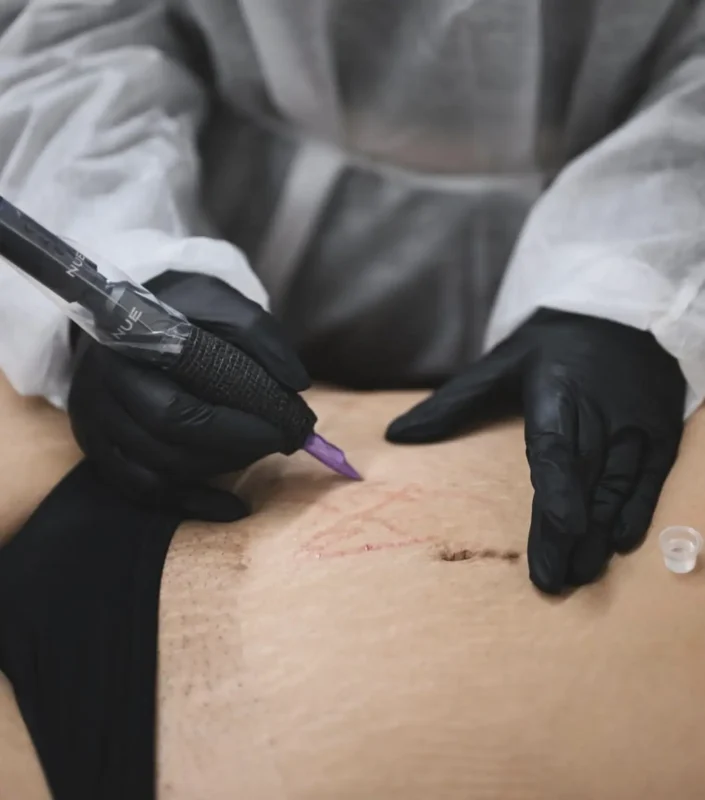
Tattooing is a form of skin penetration, which means it carries the same infection risks as minor surgical procedures. Bloodborne viruses like hepatitis B, hepatitis C, and HIV can spread through unhygienic practices, so health and safety standards are non-negotiable.
Sterile instruments and single-use tattoo needles.
Disposable cartridges and tattoo products opened in front of the client.
Strict infection prevention and autoclave sterilisation.
Approved biohazard containers for sharps.
New gloves and masks for every client.
Client information sheets explaining aftercare and infection risks.
Studios must also keep written client consent forms and maintain hygiene logs to comply with council rules. During inspections, officers from the Department of Health and Community Services check sterilisation records, disinfection products, and waste disposal areas.
At our Brisbane studio, we’ve built our reputation on hygiene excellence — because prevention is always better than treating a blood-borne disease.
Cosmetic Vs Traditional
People often assume cosmetic tattooing follows lighter rules, but that’s not the case. Cosmetic tattoo artists are bound by the same infection control standards and council registration as body tattooists.
Body art: Decorative, often large-scale designs.
Cosmetic tattooing: Focuses on enhancing brows, lips, and lash lines using techniques such as microblading, with shallower pigment implantation for softer, more natural-looking results.
Both are legally defined as skin penetration procedures. That means the same standards apply for sterilisation, hygiene approvals, infection prevention, and bloodborne virus control.
We use only certified tattoo inks and pigments that meet AICIS and EU safety requirements — never unregistered or imported products of unknown origin.
Tattoo Pigments And Safety Standards
Every pigment and tattoo ink used in Australia must comply with the Australian Industrial Chemicals Introduction Scheme (AICIS). Artists are legally responsible for ensuring that their tattoo products don’t contain harmful or banned ingredients like lead, cadmium, or azo compounds.
Pigment Type
Oversight Authority
Safety Criteria
Cosmetic Pigments
AICIS + EU REACH
Low-metal, hypoallergenic compounds
Traditional Body Art Inks
AICIS
Long-term pigment stability, traceability
Unregistered Pigments
—
Illegal for professional tattooing services
Clients should always feel comfortable asking about pigment brands — it’s your right to know what’s going into your skin.
Studio Audits And Council Inspections
Every clean tattoo studio has a mountain of paperwork and hygiene records. Local councils conduct regular and random inspections to check compliance.
Clean, disinfected surfaces
Proper storage of tattoo products and needles
Infection-control documentation
Council-approved sterilisation logs
Studios that breach hygiene or licensing rules can be fined, shut down or prosecuted. Queensland alone conducted over 1,200 studio audits in 2024.
How To Check If Your Artist Is Licensed
Confirm council registration with your local health department.
Check the licence certificate is displayed.
Look for infection control qualifications (HLTINFCOV001 / HLTINFCOV002).
Assess hygiene standards and sterile practices.
Review the client consent form.
Confirm public liability and professional indemnity insurance.
If something feels off — trust your gut. Professional studios are proud to show how they protect their clients.
artist
With professional experience since 2016, Anastasia is a certified and licensed cosmetic tattooing specialist with advanced expertise in fine line tattooing. She holds all required licenses and qualifications for permanent makeup in both Europe and Australia, ensuring precise, safe, and high-quality results.
Depends on where you live in Australia. In some states, like Queensland, they need a special operator and tattooist license to do some skin penetration works like eyeliner tattooing.