The lip tattoo healing process begins right after the procedure, as the skin’s surface is lightly disrupted to apply the pigment. While it doesn’t require formal downtime and won’t interfere with your daily routine, some mild recovery is expected.
Following a cosmetic procedure, you may experience temporary side effects such as swelling and sensitivity. Your lips will go through a shedding phase that typically lasts around ten days. Although the overall healing time is short, it’s normal to encounter some discomfort during the process.
Here’s the truth: what you see in the mirror on day one is not the final result. The pigment needs time to settle, your skin needs to repair, and your lips need to find their balance again. That’s why the lip tattoo healing stages are as important as the tattooing itself.
With the right lip blush tattoo aftercare, your lips will heal evenly, hold colour better, and feel more comfortable along the way. Skip the aftercare or rush the process, and you risk patchy pigment or extra fading. Healing isn’t just waiting — it’s active skin recovery.
Table of Contents
How long does a lip tattoo take to heal?
Most individuals’ recuperation period for a superficial lip blush ranges between 7–10 days. This duration is needed for the skin’s exterior to mend, but approximately a month is required for the underlying tissue to heal completely and for the pigments to stabilise.
Once the shedding phase concludes, you can deem the lip tattoo as healed. However, if you desire a touch-up, you should delay for roughly six weeks. This is because re-traumatizing tissues that haven’t fully recovered can result in lasting scars.
Lip tattoo procedures utilise an electric device. The professional tattoo artist punctures the skin with innumerable minuscule points, achieving the desired hue intensity, subtle or vivid. Consequently, the skin undergoes trauma and necessitates a healing phase.
swelling and peeling
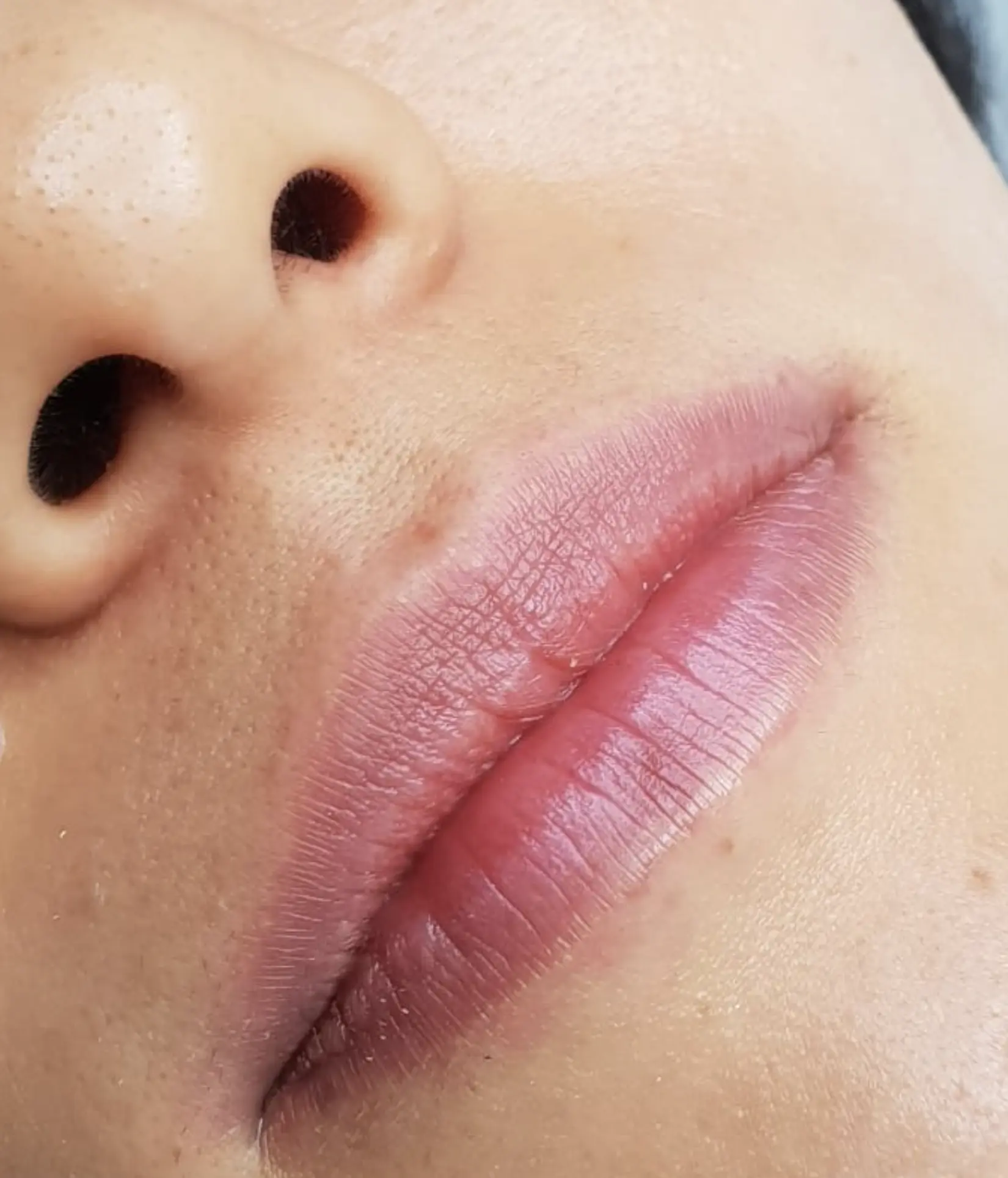
Let’s be honest: the middle part isn’t glamorous. By day three, most clients text me in a panic because their lips are peeling and the colour looks patchy. This is the lip tattoo scabbing process, and it’s the stage where patience pays off.
Yes, your lips will flake. Yes, the colour might look too light or uneven. But don’t pick — it only pulls pigment out and can cause scarring. Instead, keep things clean, moisturised, and hands-off. Within a few days, your new lips will peek through.
healing week by week
Healing isn’t linear — some days your lips will look amazing, and the next they’ll feel flaky and pale. That’s normal. Below is a week-by-week guide so you know exactly what’s coming and when to chill out instead of stressing.
Timeline
What You’ll Notice
Aftercare Tips
Day 1–2
Lips feel swollen, plump, tender; colour looks darker than expected
Apply a cool compress (not ice directly). Use ointment lightly. Avoid hot drinks.
Day 3–4
Flaking, peeling, scabbing begins; colour starts lifting off
Do not pick! Keep lips clean, dab balm sparingly.
Day 5–7
Patchy colour, uneven tone — looks like it’s “disappearing”
Normal ghosting phase. Trust the process.
Week 2
Peeling slows, lips feel smoother; colour looks pale
Stay hydrated, avoid sun and spicy foods.
Week 3–4
Colour gradually resurfaces, softens into a natural look
Gentle lip balm ok. Don’t exfoliate yet.
Week 6–8
Final colour has settled; ready for touch-up session
Book your follow-up for best long-term results.
recovery tips
Over the years, we’ve noticed little details make the biggest difference in healing. Here are the pro tips I give every client:
Avoid hot drinks for 48 hours — heat can worsen swelling.
Skip gym and saunas for 2–3 days — sweat is not your friend here.
Hydrate inside and out: drink water and use a light balm.
Shield from the sun — Queensland UV is no joke. Wear a hat and SPF balm after peeling stops.
Stick to mild foods early on — spice and salt sting freshly tattooed lips.
Healing Process Day by Day
Following your appointment, your lip skin will experience multiple phases of the permanent lip pigment recovery procedure. It has to heal from the inflicted trauma and mend microscopic injuries.
Appropriate post-treatment methods should be applied alongside these phases.
Contact your cosmetic tattoo artist if you observe abnormal signs or intense discomfort during lip colourrecuperation. You might be experiencing an allergic response or a possible infection.
Day 1: Swelling and vivid colour
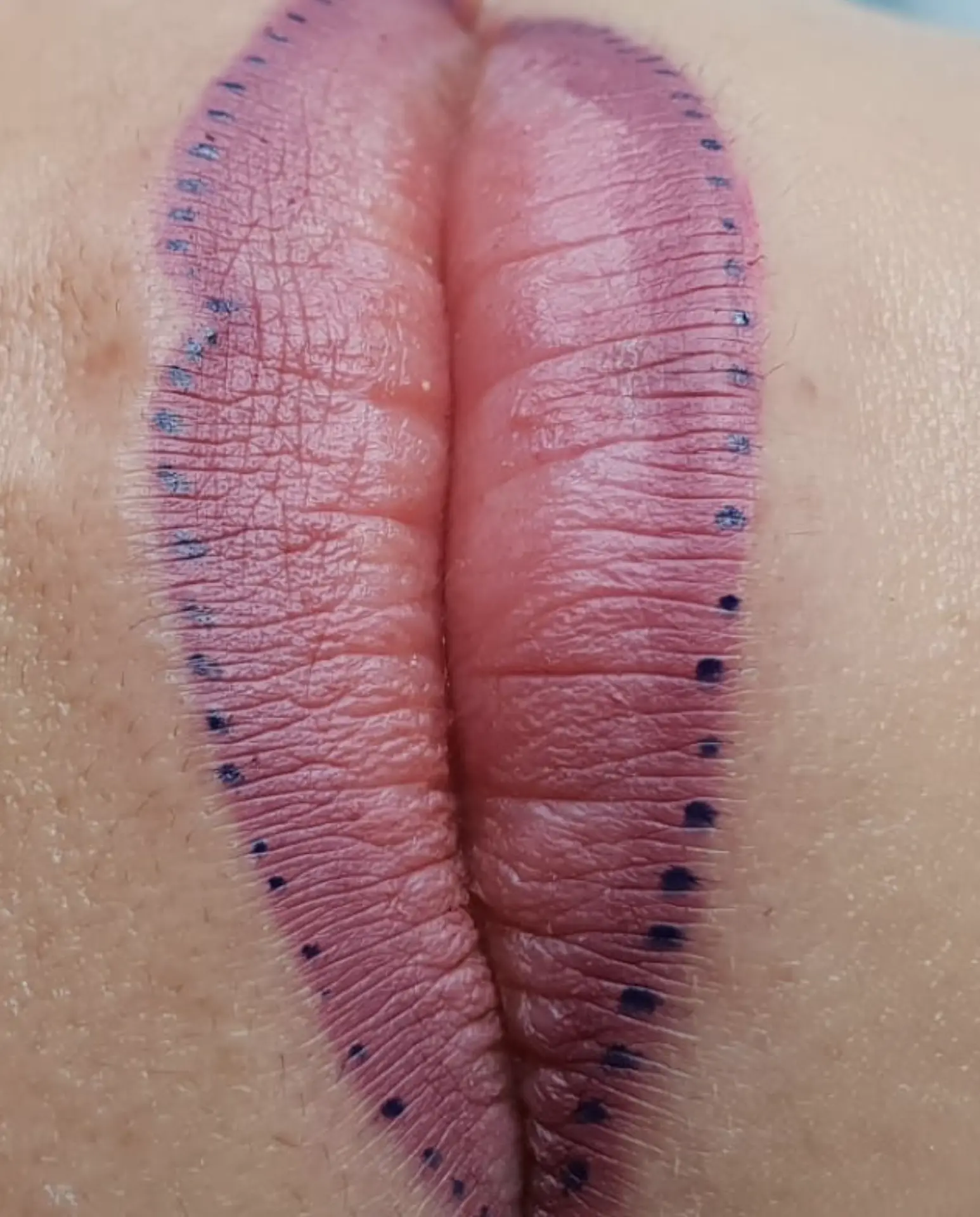
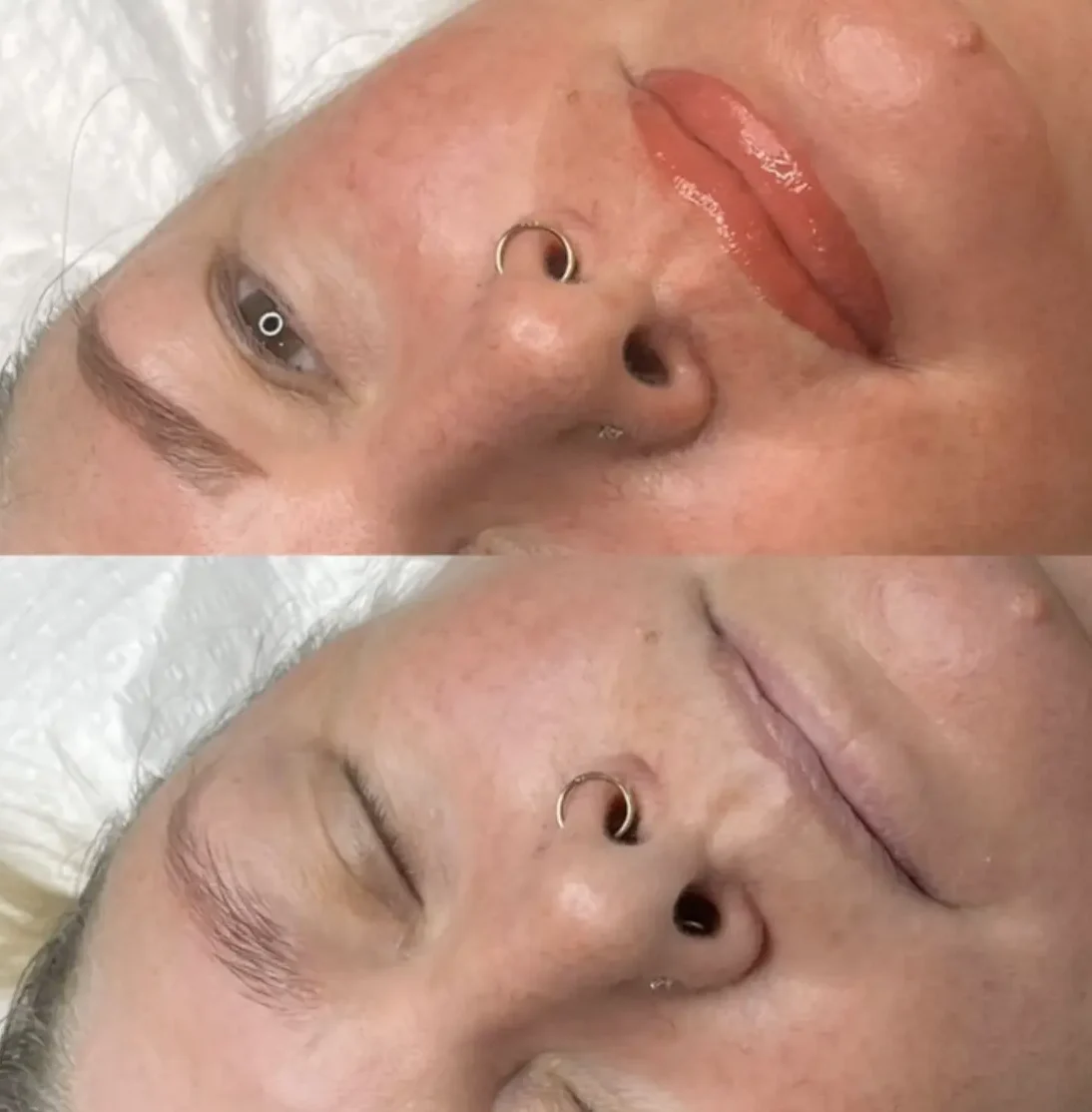
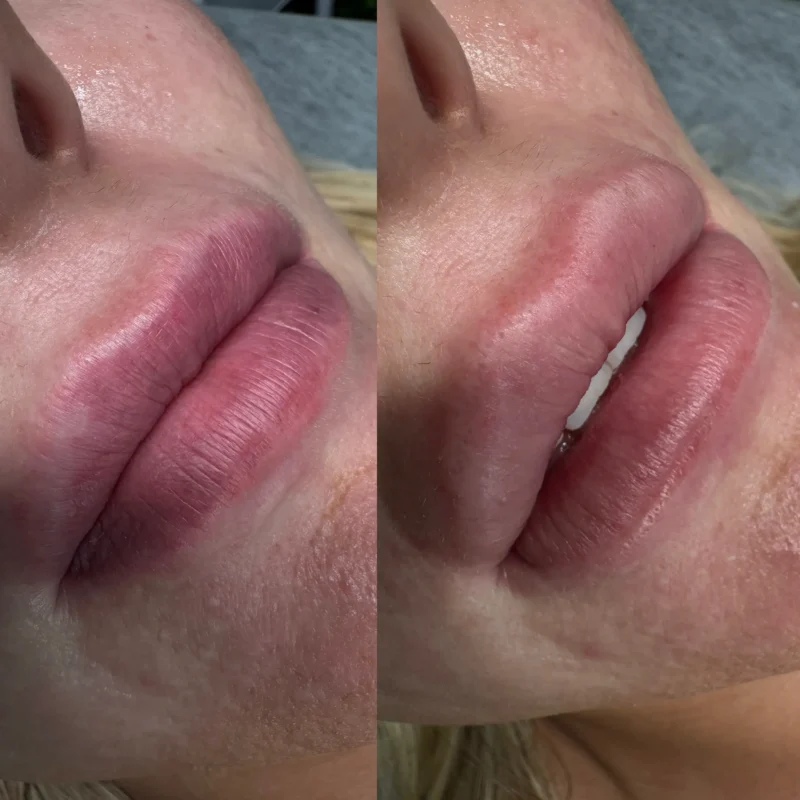
The lip tattoo healing stages actually begin during your appointment. By the end of your session, your lips will already start to puff up. For some, swelling is mild; for others, lips may temporarily double in size. Both reactions are normal.
Healing begins as soon as the procedure is finished.
Lips swell — anything from mild puffiness to lips looking double in size.
Some lymph fluid may appear (dab gently with a clean cotton pad).
Colour looks very bright and bold — this isn’t the final shade.
Apply a thin layer of ointment as directed.
💡 Tip: Use a clean, chilled compress (not direct ice) to reduce swelling.
Day 2: Tenderness and dryness
By day 2, swelling reduces but dryness kicks in. Your lips may feel tight, flaky, and begin to form a thin crust. This is a protective layer — resist the urge to pick or peel.
Swelling starts to reduce, but tenderness continues.
Lips feel tight and dry, with some minor discomfort.
Colour still looks dark and intense.
Avoid spicy or salty foods that may sting.
Keep lips hydrated with the balm provided.
Day 3–4: Peeling and scabbing
The lip tattoo scabbing process begins.
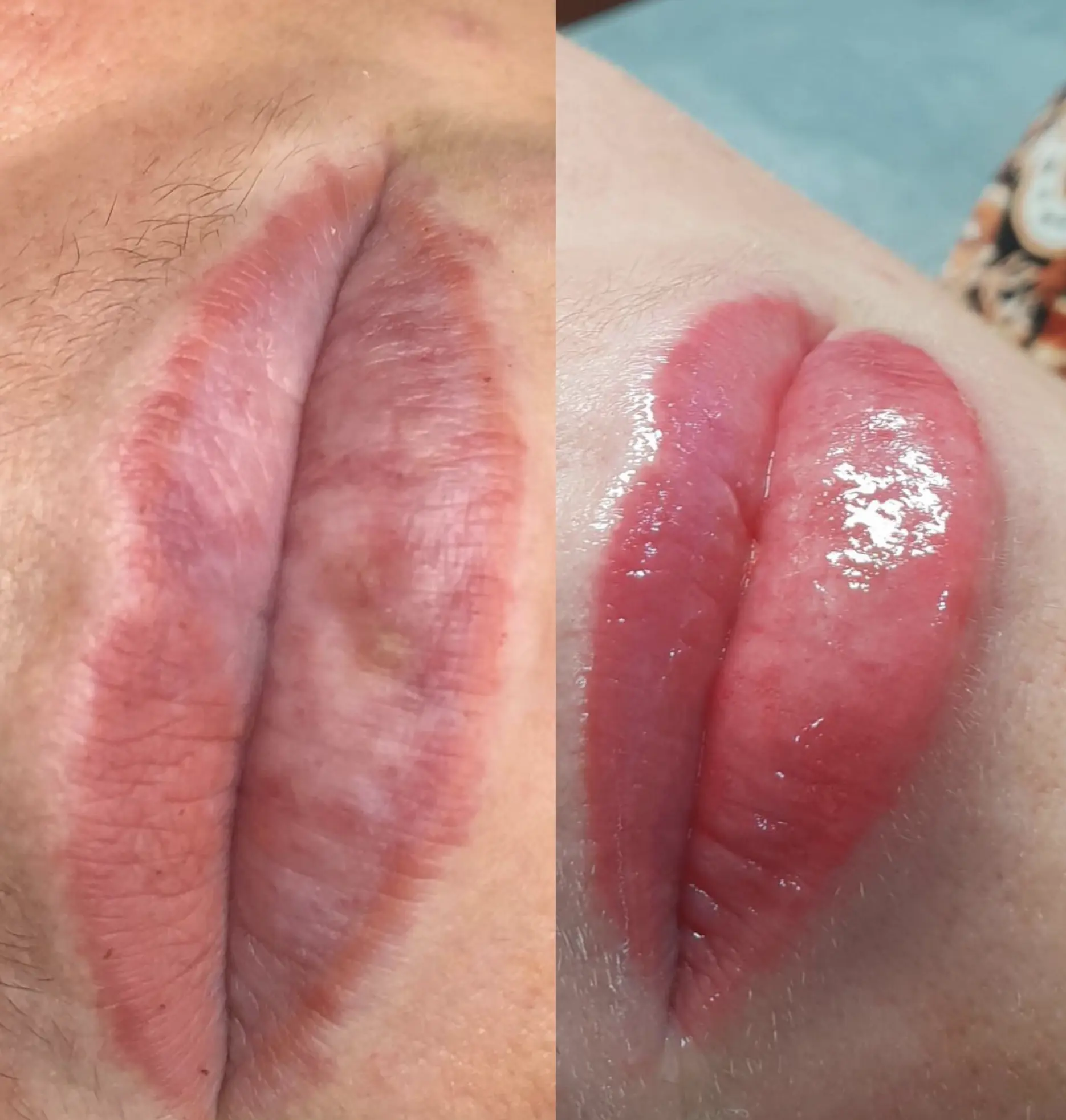
Flaky skin forms and starts peeling off in thin layers.
Lips look patchy, uneven, and the “ugly duckling” stage sets in.
Itchiness may appear as part of normal healing.
Do not pick, peel, or rub — it can remove pigment.
💡 Tip: Sip drinks through a straw and eat small bites to avoid cracking the crust.
Day 5–7: Patchiness and fading
By days 5–7, your lips start shedding in flakes and ribbons, often from the centre outwards. It’s not glamorous, but it’s temporary.
This is when lips can look patchy and uneven.
Itching may appear as part of normal wound healing.
Never scratch, rub, or peel — it risks uneven pigment.
💡 Pro tip: Patience here pays off. Picking at scabs often causes gaps in pigment that need correcting at touch-up.
Day 8–12: Light peeling and ghosting
Around day 8–12, most peeling subsides. Minor flaking may continue, but your lips should feel smoother. At this stage, many clients think their colour has completely disappeared. This is the ghosting phase — the pigment hides under healing skin.
Most peeling stops by day 10.
Minor flaking may remain but lips feel smoother.
Colour looks much lighter — up to 40–50% faded compared to day one.
Many clients think the tattoo “failed,” but this fading is normal.
Flaking has ended, but lips look very light or pale.
This stage can be unsettling, but pigment will return gradually.
Continue applying balm lightly to avoid dryness.
💡 Tip: Avoid makeup until peeling completely stops to prevent irritation.
Week 3–4: Colour resurfaces
Lips look more natural and balanced.
Pigment slowly resurfaces through healed skin.
Shade softens into a natural tone.
Week 6–8: Final results + touch-up
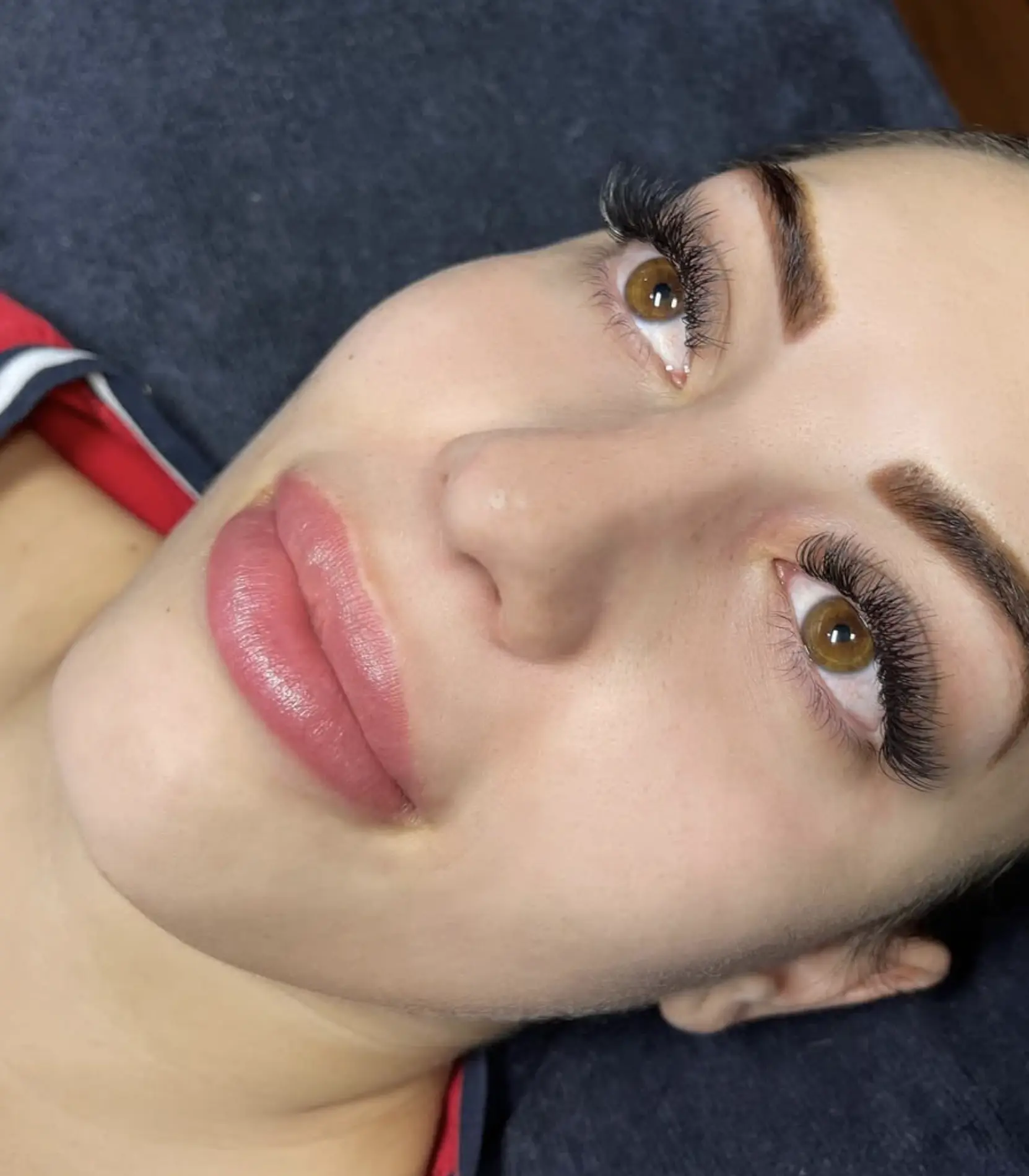
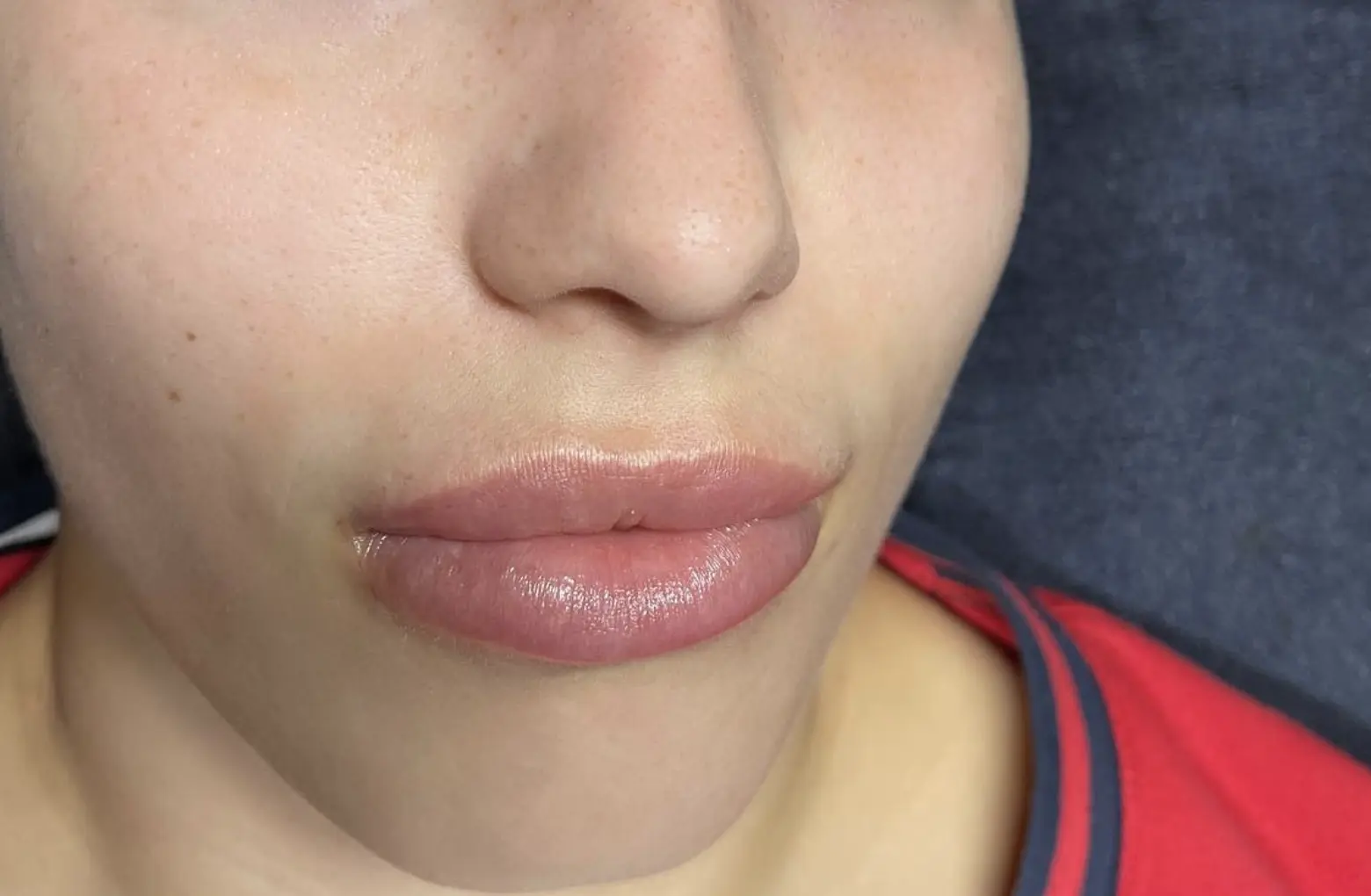
Final pigment has settled.
Lips are smooth, soft, and healed.
True colour is up to 50% lighter than the first day.
Time to book your lip tattoo touch-up session — this perfects shape, depth, and tone.
Does the lip colour recovery process vary by style?
The extent of lip shedding is contingent upon the amount of work executed. While lip tattoo recovery phases remain consistent, the intensity of symptoms varies among individuals and may be influenced by the type of lip tattoo you’ve chosen.
The lip blush healing can be more challenging for those opting for a denser appearance or vivid shade. This approach tattoos the entire lip area, including the borders, which means the whole section undergoes shedding. By contrast, watercolour lips usually involve reduced flaking, as this style lacks a distinct border and the outer edges are treated more lightly. In this case, the central part of the lips will experience more shedding than the outer areas.
The ombre style lip blushworks in reverse — pigment is heaviest at the periphery and softens towards the middle, resulting in denser scabs along the lip line. A permanent lip liner focuses only on the perimeter, where scabs will form. Depending on pigment concentration, lip tattoo recovery may be complete in fewer than ten days.
Trust the process, love the result
Healing isn’t the glamorous side of cosmetic tattooing, but it’s the stage that makes your results last. If you go in knowing what to expect, you’ll stress less and enjoy the transformation more.
At Cosmetic Tattoo Studio Brisbane, we guide you through every step, from treatment day to touch-up. And if you ever feel unsure mid-healing? That’s what we’re here for — support, reassurance, and expert care.
artist
Anastasia has been a professional cosmetic tattooing specialist since 2016, with extensive experience in lip blush, ombré brows, and eyeliner tattoo techniques. Certified and licensed in both Europe and Australia, she brings international expertise and a commitment to safe, high-quality treatments. Anastasia has worked with hundreds of clients in Brisbane, tailoring each procedure to individual skin types, lifestyles, and desired outcomes.
Most lip tattoos take about 7–10 days for the surface to heal, but full colour settling can take up to 6–8 weeks. During this time, swelling, peeling, and fading are normal parts of the lip tattoo healing process.
The healing stages include swelling in the first 1–2 days, peeling and scabbing around days 3–7, ghosting and fading in weeks 2–3, and the final colour revealing itself by week 6–8. Each phase is natural and part of the body’s recovery.
Yes, swelling is completely normal in the first 24–48 hours after treatment. For some clients, lips may look double their usual size, while others only notice mild puffiness. Cool compresses help reduce swelling quickly.
This is the ghosting stage, where pigment hides under new skin layers. Many clients think the colour has disappeared, but it resurfaces gradually. By week 4, lips start to show their true tone again.
It’s best to avoid makeup on or around the lips until peeling and scabbing have stopped, usually around day 10. Applying makeup too soon can interfere with healing and risk pigment loss.
To support healing, avoid spicy or salty foods, saunas, swimming, excessive exercise, and direct sun exposure in the first week. These can irritate the skin or slow the recovery process.