

Eyeliner Tattoo Gone Wrong can turn what should be a time-saving beauty boost into a daily frustration. Instead of crisp definition, you may end up with pigment distortion, uneven lines, or uncomfortable healing that impacts both your look and confidence.
Whether the colour has healed too dark, shifted to blue or grey, migrated past the lash line, or simply doesn’t suit your features — you’re not alone. These issues are more common than you think. Thankfully, there are safe and effective eyeliner correction solutions available, including laser removal, saline lightening, and expert touch-up techniques from skilled PMU artists.
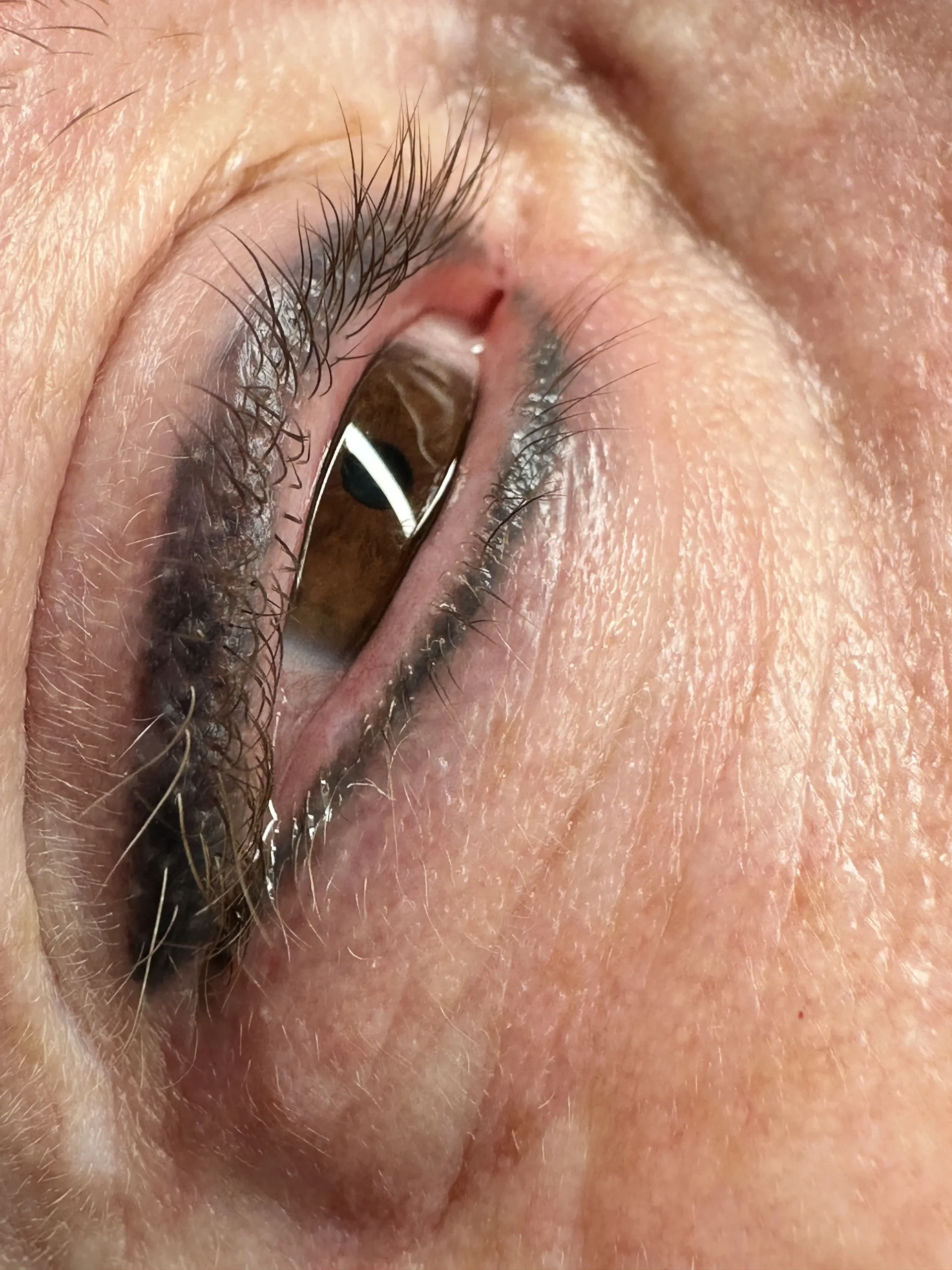
There are multiple reasons for undesirable eyeliner tattoos. The most benign issue is simply disliking the result. It’s bothersome, but it doesn’t pose health risks. A more pronounced concern is when the pigments change, producing notably displeasing blue or green tints or shifts, resulting in a smudged and untidy look. Furthermore, there can be mild side effects, bothersome but not extreme, and graver health issues.


Not all cosmetic tattoos heal the same. Sometimes an uneven eyeliner tattoo shows up because the artist stretched the skin too much, worked too deep, or didn’t consider your unique eye shape. Other times, eyeliner tattoo migration happens when pigment spreads outside the lash line. Add Brisbane’s humid climate into the mix, and healing issues can compound.
The truth? Even a small slip can mean a thick eyeliner tattoo fix is needed later on. That’s why understanding the root causes helps you know whether you need eyeliner tattoo removal or correction .
When clients pop into the studio, the red flags are usually obvious:
Each of these screams eyeliner tattoo regret, but thankfully, they can be improved with the right specialist.

A huge part of the complaints I hear is about colour. Pigments can oxidise, leaving you with eyeliner tattoo fading to blue or green. This happens when old carbon-based inks or poor pigment mixes are used.
At Cosmetic Tattoo Studio Brisbane, we use stable pigments to reduce this risk, but older tattoos done elsewhere often walk in needing a lightening or saline eyeliner tattoo removal
That first week? Expect your liner to look bold. But when it’s still jet black and heavy months later, you’ve got a case of eyeliner tattoo too dark.
In most cases, we can soften it with eyeliner tattoo lightening sessions. Think of it like taking the volume down — you don’t always need a full erasure, just a tone-down.

Every aesthetic tattoo procedure can lead to benign but uncomfortable side effects. These are typical bodily reactions.
A few days post-procedure, you may observe the subsequent permanent eyeliner side effects:
These symptoms are anticipated and shouldn’t raise alarms if they diminish within several days. Yet, if you discern that your inflammation is growing instead of receding and any listed side effects persist beyond day 3/4, reach out to your technician.
You may be encountering an infection or an allergic response.
Piercing the skin’s barrier inevitably comes with specific hazards. The potential risks and challenges of eyeliner tattoos include:

You might adore flaunting your go-to eyeliner design daily, but witnessing its enduring rendition may not align with your anticipation. Alternatively, your technician might have yet to capture your vision.
Feelings of dissatisfaction and frustration might emerge. However, pause and ponder – could you require an adjustment period for this fresh appearance? Clients occasionally require several weeks to adapt to possessing indelible makeup. Allow some duration; it may eventually resonate with you.
Indeed, this isn’t relevant if the configuration of your eyeliner tattoo doesn’t flatter your natural contours. The wing isn’t positioned aptly, or the balance between both eyes lacks precision. On the bright side, slight flaws are likely amendable, so schedule a refinement session.
Eyeliner tattoos offer a plethora of styles. We suggest initiating with a more understated and less intense design than you might initially desire to avert potential eyeliner tattoo mishaps. Opting for cosmetic procedures for a discreet, timeless style offers versatility, and you can enhance it with standard makeup rather than commencing with an overly bold style and lamenting it later.

The predominant problem with flawed eyeliner tattoos pertains to an unsuitable selection of pigment shade. While many of us are inclined towards bold black liner, deep black isn’t the optimal choice for cosmetic eyeliner tattoos. Black dyes transition into distinctive shades of grey, blue, or green as time progresses.
Hence, the pigment needs to be adjusted to resemble a deep brown, contingent on your skin’s undertone. Patrons who persist on deep black generally witness a transition to blue/green as time goes on.
They often become muted when dark colours are inserted too deep into the skin beyond the intended depth. This oversight typically falls on the artist – they might have applied excessive pressure during the tattooing process, causing the pigments to penetrate too deeply.
The calibre of the pigment is pivotal in determining the outcome of an eyeliner tattoo’s colour. Some pigment formulations are more reliable than others. Therefore, it’s advisable not to seek discounted rates when scheduling an appointment – technicians who price their services substantially below the market rate might resort to inexpensive, sub-par pigments.
Next is your body’s unique chemistry. Each pigment shade comprises various colour components. Our bodies respond distinctively to these components, potentially dissolving certain parts quicker than others.
For instance, if you have anemia, your body absorbs iron-oxide elements acceleratedly. Many individuals’ systems process the warmer tones more rapidly, shifting the colour towards more fabulous shades.
This aspect is beyond one’s control – how one’s body will interact with the pigments is unpredictable.


Once introduced into the skin, pigments might stray beyond the originally intended design. This can occur due to multiple factors – the composition of the stain, the artist’s expertise, your skin’s characteristics, and so on.
The eyelid is a canvas of diverse beauty, with each section possessing unique attributes. However, some areas are prone to the whimsical dispersion of pigment. Hence, the outer junction of the lower and upper lash lines should always be left untouched.
A proficient permanent makeup artist can modify their approach based on distinct skin regions. They might employ an alternative pigment blend for areas that pose challenges – pigments rich in carbon are inclined to spread more, so they’re avoided near the eye corners.
If you’re living with eyeliner tattoo regret, removal may be the best solution. There are a few main techniques:
| Removal Option | How It Works | Pros | Cons |
|---|---|---|---|
| Laser Removal | Breaks pigment with light energy | Effective, precise | Requires multiple sessions, risk of swelling |
| Saline Removal | Draws pigment out with salt solution | Safer around eyes | Slower results |
| Colour Correction | Neutralises pigment with new tattooing | Quick visual improvement | Doesn’t remove pigment, needs upkeep |
Recent statistics from the Australian Society of Dermal Clinicians show a 30% increase in tattoo removals over the past five years — with cosmetic tattoos making up nearly half of those. That’s proof enough that eyeliner tattoo correction and removal are in demand.

Initially, it’s vital to evaluate the scenario. In what manner has your eyeliner tattoo deviated from expectations? Are you facing a medical urgency, or is it merely a cosmetic concern?
Should you encounter concerning symptoms during the recovery phase, contact your experienced tattoo artists. Describe the manifestations and provide them with a photo to gauge the situation. The symptoms are either a typical healing phase, dissipate independently, or consult a dermatologist.
If your cosmetic tattoo eyeliner has shifted in hue over time or the pigments have spread, you’re presented with two choices – rectification or elimination. It would be wise to schedule meetings with an eyeliner tattoo technician and a removal specialist to explore the potential solutions with them.
Correcting a bad eyeliner tattoo isn’t a job for beginners. It requires precision, understanding pigment chemistry, and knowing when to stop. At Cosmetic Tattoo Studio Brisbane, we see correction work every week. Clients come in frustrated, but leave relieved knowing there are safe fixes.
If you’re searching for an eyeliner tattoo correction specialist, make sure they can show healed results, not just fresh photos.

Prevention is always easier (and cheaper) than correction. Here’s what I recommend:
Remember: an eyeliner tattoo should feel like a time saver, not a lifetime mistake.
If your eyeliner tattoo has gone wrong, you’re not alone — and you’re not stuck with it forever. Whether it’s a simple eyeliner tattoo shape correction, a lightening session, or a full removal, there are safe ways forward.
At Cosmetic Tattoo Studio Brisbane, we believe no one should live with eyeliner tattoo regret. The key is knowing your options and working with someone who’s done the hard fixes before. Ready to take back control? Book a consultation and let’s talk solutions.

Since 2016, Anastasia has built her expertise in the professional tattooing industry. She is a certified and licensed cosmetic tattoo specialist, holding all the required qualifications for permanent makeup across Europe and Australia.
Common issues stem from inexperienced artists, poor-quality ink, incorrect pigment depth, and lack of hygiene or consultation. These can lead to smudging, uneven colour shifts, or misplaced line placement.
This often happens when overly cool, carbon-based black pigment is used or inserted too deeply. Over time, it oxidises and heals into blue or green tones.
Wait until the pigment has fully settled — typically 4–6 weeks. This ensures swelling has gone down and your skin is healed enough for accurate correction or lightening.
For migration or patchy healing, removal techniques like laser or saline are often most effective. For uneven or dark results, a skilled technician may perform lightening or touch-up correction.
Do your homework: choose a certified and experienced specialist who uses high-quality pigments, maintains strict hygiene, and conducts thorough consultations. Follow aftercare precisely to support proper healing.