

Aftercare eyeliner tattoo routines play a crucial role in what is often considered the easiest healing process among all permanent cosmetic procedures. This may come as a surprise, but if you’re in good health and have chosen a skilled artist, you can expect a smooth, quick, and safe recovery. In this guide, we’ll explore how your permanent eyeliner looks as it heals and break down the two most common and recommended approaches to aftercare.
Once tattooed, the skin where the eyeliner has been applied becomes extremely sensitive. As a result, exposure to sunlight during the healing phase isn’t advisable. When stepping outdoors, it’s crucial to use sunscreen and wear glasses with UV-filtering lenses to lessen potential adverse effects.
Post-eyeliner tattoo care emphasises shielding from ultraviolet light, which can lead to sunburn and induce pigmentation on the recuperating skin patch. Until the scabs have completely vanished after the procedure, refrain from applying makeup, avoid rinsing with water, and utilise micellar water, toner, or lotion on your face for skin cleaning.


Right after the eye tattooing, there might be a secretion on the skin, which can be dabbed using a cotton pad moistened with chlorhexidine. This antibacterial solution is highly effective in reducing inflammation, easing pain, and soothing the affected area. Applying the antiseptic every 2 hours is permissible.
What’s the approach for eyeliner tattoo maintenance? You may notice swelling and a reddish tint post-procedure on the first day. Typically, these signs dissipate within several hours. To avoid excessive swelling, limit your water intake. Discover the enchantment of a frosty compress, effortlessly banishing skin puffiness!
Throughout the entire recovery duration, the tint of the pigment might appear different from the eventual outcome. This shouldn’t be a cause for concern: the eye tattoo will attain its intended hue post-recovery. For the initial fortnight, abstain from using makeup and lotions containing alcohol. However, after thirty days, you’re free to resume your regular care routines and lifestyle.
By the third day, you might notice minor flaking. It’s essential not to pick at these crusts; the hardened cells should shed naturally. If interfered with, the pigment may not settle properly and might be expelled with the lymph, and the emergence of microtraumas will prolong the healing process. Persist with cleansing the area using chlorhexidine for seven days to ward off infections.
Taking care of a permanent eyeliner tattoo involves a set of steps that one should rigorously adhere to:
Your tattoo professional will suggest products that promote gentle softening and accelerated tissue healing.
During the appointment, the expert will guide eyeliner tattoo care and highlight what should be strictly avoided.
Guidelines to adhere to after the tattoo procedure:
If the tattoo’s pigment appears overly rich, resist the urge to lighten it. As the skin heals, some of the dye is expelled alongside the lymph, so more is applied during the initial phase. After a month, the hue will become natural once the skin is fully healed. It’s vital to remember that a touch-up is necessary four weeks post-procedure. The tattoo specialist will address pigment inconsistencies and adjust the form and shade.
In the initial stages, the tattooed area must not come in contact with water, which can induce added swelling, potential infections, and pigment leaching. Only after the crusts have naturally shed can you wash your face. Use water that’s been boiled and then allowed to cool. Instead of using a towel to dry, gently dab the skin with delicate tissues.
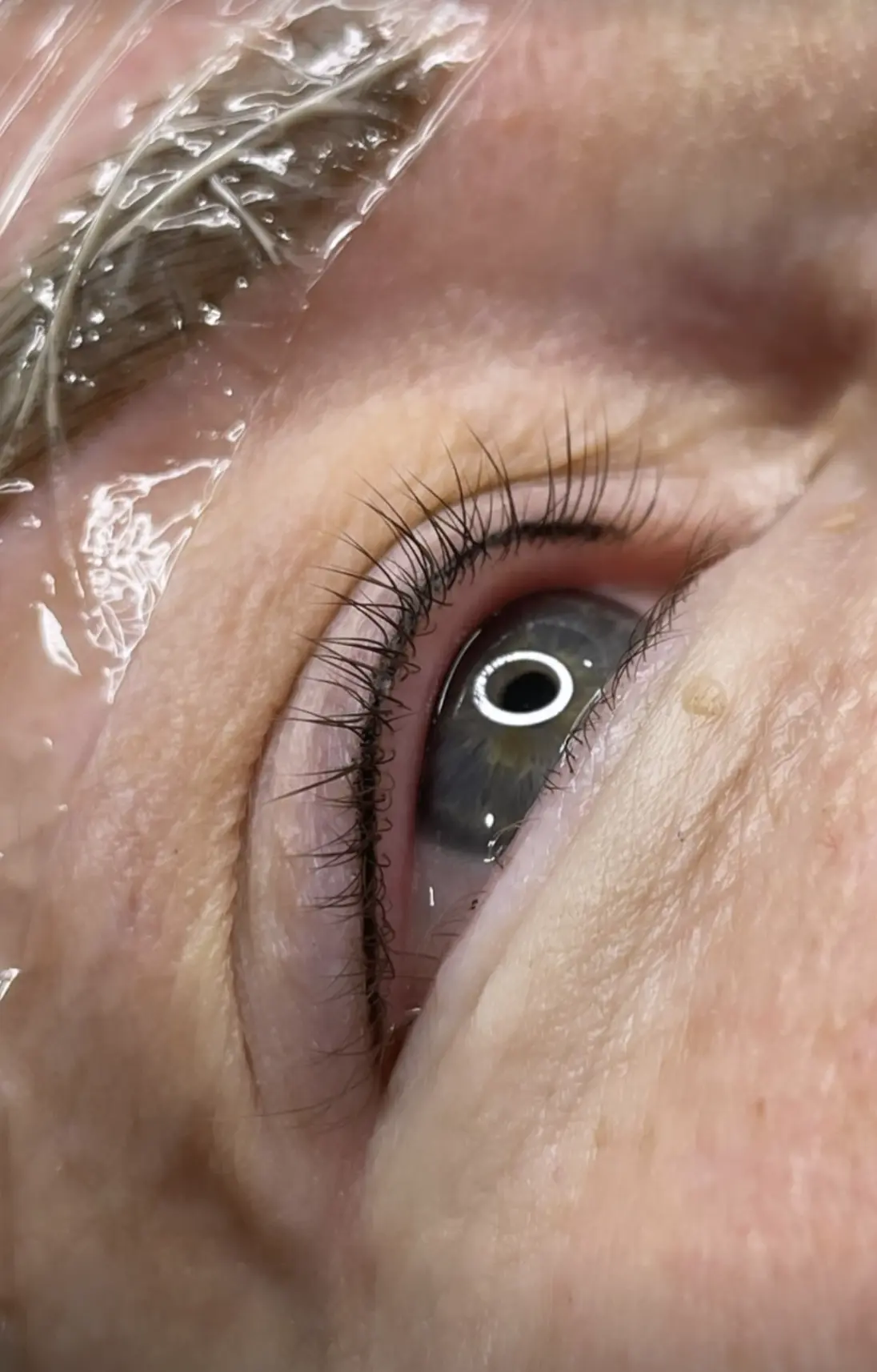

Until the tattooed area is fully recovered, it’s recommended by professionals to steer clear of decorative cosmetics. This is because each makeup removal exerts unnecessary strain on the sensitive region. For the same reasons, you should avoid applying false eyelashes and refrain from lash extensions and lamination for a month.
A first touch-up is indeed mandated and should be undertaken one month following the permanent makeup application. What’s the purpose? The design might have noticeable voids once the crusts have fully formed and shed. Several reasons might account for the pigment not settling correctly, including:
If you’re unsatisfied with the outcome of the tattoo, options like eyeliner tattoo removal or a remover are available. Please book a consultation with our eyebrow experts at our exclusive permanent makeup studio. Visit our website to schedule an appointment and transform your brows! We’ll thoroughly discuss the merits of each method and help tailor the ideal look for you.
Although a handy and attractive option, eyeliner tattooing necessitates understanding possible complications and adverse outcomes. Some people might face short-lived swelling, a reddish hue, or a slight sensitivity right after the treatment. Typically, these manifestations diminish in a matter of days.
Although infrequent, allergic reactions to the tattoo inks can occur. Before the procedure, you must inform your practitioner about any allergies. Verifying that the establishment adheres to stringent cleanliness and sterilisation standards is vital to reducing infection risks.


Wet healing revolutionised the game, replacing the outdated dry healing method. As the name suggests, with dry recovery, you ensure that your permanent eyeliner remains dry continuously. Post your eyeliner session, you’ll abstain from interacting with the tattooed area and allow the eyeliner to heal autonomously.
ADVANTAGES: It’s a hands-off approach, and there’s no need for an aftercare package.
DRAWBACKS: You may experience considerable scabbing during the healing phase, leading to uneven colour retention.
Many permanent eyeliner specialists prefer the wet healing method for their clientele. Post-procedure, you’ll be guided to cleanse the eyeliner every quarter hour. Depending on the specific guidance of your artist, this cleaning routine may span 2 to 3 days. An essential aspect is applying a dedicated eyeliner healing ointment to prevent it from becoming overly dry.
ADVANTAGES: The process circumvents scabbing, producing a more uniform colour as it heals.
DRAWBACKS: It demands consistent attention and necessitates carrying an aftercare set.
While dry healing remains a prevalent choice, wet recovery is observed to yield the most favourable outcomes post-recovery. Engaging in a dialogue with your artist is advisable to comprehend their preferred healing strategy and expectations for post-procedure care.


Gently blot any fluid—such as lymph or pigment—with a sterile gauze pad. Avoid wiping or rubbing the area. Cleansing should be done gently with clean fingers or a cotton pad, using only water or a mild, hygienic product as directed.
Keep the tattooed area dry and free from makeup for at least 7–10 days. Avoid swimming, heavy perspiration, steam rooms, and saunas during this period.
No—picking or peeling scabs can cause scarring and disrupt pigment retention, leading to patchy results. Let any flakes or scabs fall off naturally.
What is a typical healing timeline—and when will I see the final result?
Days 1–3: Expect some swelling, tightness, and darker pigment due to oxidation.
Days 4–7: Scabbing and flaking begin; color may appear faded.
Days 8–14: The skin regenerates beneath; final pigment starts to settle.
4–6 weeks later: Full results are visible, and the skin has generally healed.
A touch-up is typically advised 4–8 weeks after your initial session. This visit refines any areas where pigment may have faded or didn’t fully retain—and is key for achieving crisp, lasting results.
Sleep on your back and use a clean pillowcase to avoid irritating the area.
Wear sunglasses outdoors and apply SPF to protect pigment from sun exposure once the area has healed.
Light exercise may be allowed after 48 hours, but avoid anything causing heavy sweating or eye contact for at least 7–10 days. Avoid contact lenses until fully healed, as they may irritate or interfere with the healing skin.
Be alert for: increased redness, swelling, pus, persistent pain, or a rash. Contact your technician or a medical professional promptly if these appear.