

“Can tattoos lead to health issues?” is a question that pops up pretty regularly in the studio — and to be honest, our go-to answer is that yes, they can cause some issues, but the risks are low and can be kept under control if the tattoo is done properly.
We’re Uliana Kasperska and the team here at Cosmetic Tattoo Studio Brisbane Face Figurati, and between us, we’ve got 15+ years of experience working in Europe and Australia. We’ve seen some amazing healed-up tattoos, but we’ve also had to clean up some dodgy work from other places.
The truth is, tattoos are pretty safe when a skilled tattoo artist uses sterile equipment and high-quality ink. It’s generally when corners get cut that things go wrong – you know, poor hygiene, subpar ink or forgetting the aftercare. So let’s get down to it and break it all down for you so you know what’s normal and what’s not, and how to avoid any unnecessary health risks.
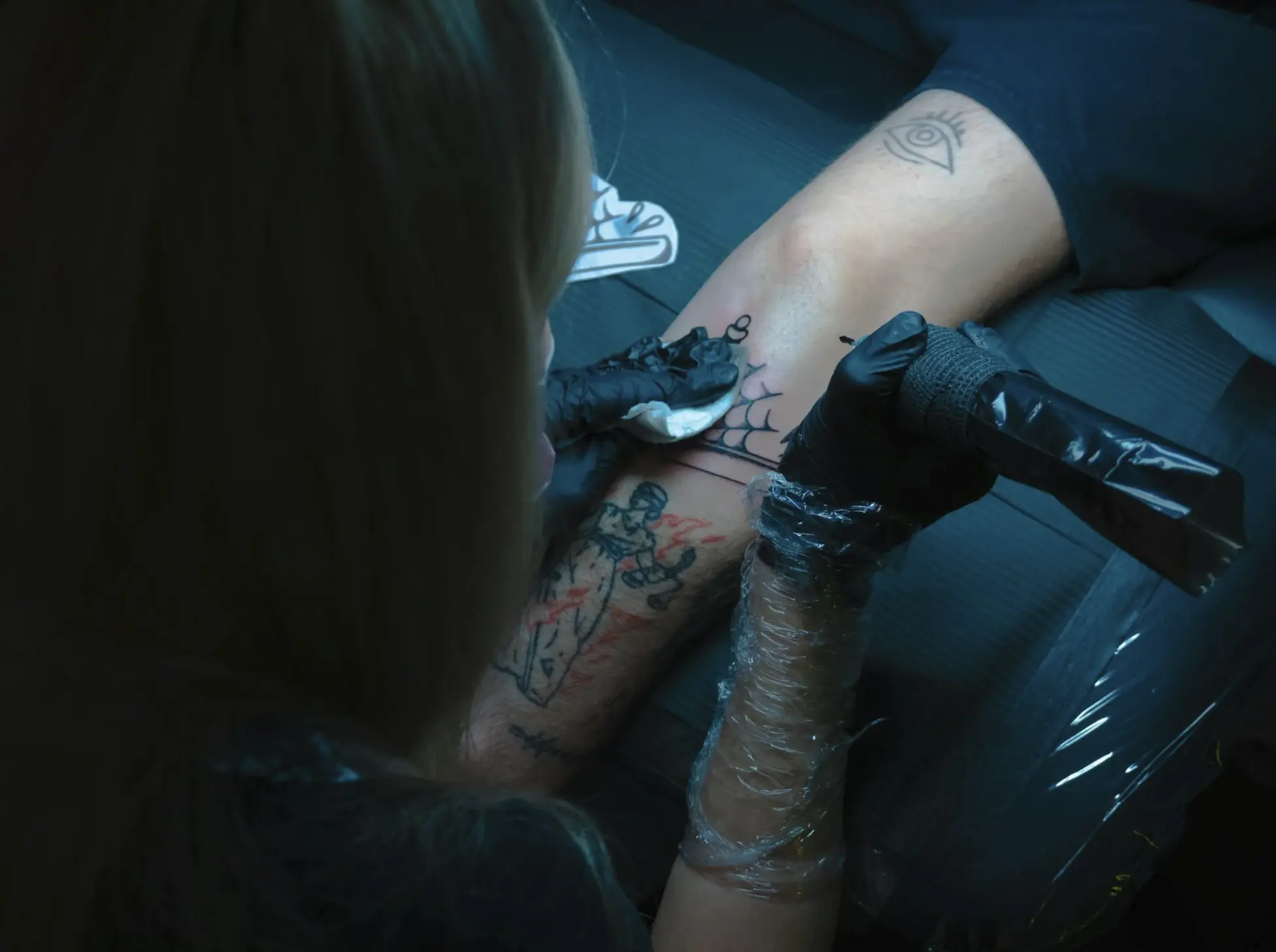
Before we get to the risks, it helps to understand what’s really going on under the skin – yes, your body is definitely reacting to the process.
When we do cosmetic tattooing (like lip blush or powder brows), we use a tattoo gun to implant tattoo pigment into the upper dermis using tiny needles. This is essentially a controlled micro-injury, and your immune system kicks into gear right away.
It looks like this:
Now, this is all completely normal and expected. That’s why you’ll see some redness, slight swelling, and later on, it might flake a bit – and if you live in Brisbane, you might find that healing can feel a bit more noticeable in the humid climate.
At a basic level, your body sees the tattoo pigments as foreign particles and treats them accordingly. Some of them stick around (that’s your tattoo), and a small amount might travel through the bloodstream into the lymph nodes. But that’s something that’s been observed in studies, and it’s not necessarily a bad thing.

Let’s face it – no skin treatment is 100% risk-free, but not all concerns are equal, and most are pretty easy to handle with the right approach.
Here’s a rundown of the most common tattoo complications we see – the ones people ask us about most often.
| Issue | What It Looks Like | How Common | What Causes It |
|---|---|---|---|
| Mild skin infections | Redness, warmth, swelling | Uncommon (with proper care) | Poor hygiene or aftercare |
| Allergic reactions | Itchy, raised skin, irritation (often with red ink) | Rare | Sensitivity to tattoo inks or metallic salts |
| Pigment migration | Blurring under skin | Rare | Poor technique or thin skin |
| Scarring | Raised or uneven texture | Very rare | Picking or trauma during healing |
| Adverse reactions | Persistent irritation or delayed healing | Rare | Ink composition or immune reactions |
From our experience, most adverse reactions and skin infections come from:
Not from properly performed procedures.
This is what most people Google before their appointment at night – often with a mix of anxiety and worry.
Now we know infection is possible – but the chances are tiny in a well-regulated, professional environment like ours.
Reputable tattoo parlours follow all the public health rules:
To be honest, it’s not just bacteria you need to worry about – there’s also the risk of viral hepatitis (think hepatitis B and C) if standards aren’t followed (which is why people often ask: “can i donate blood if i have tattoos?” after getting inked).
We always say: don’t freak out, don’t pick, keep the area clean!

Some people worry about allergic reactions, and it’s no wonder when you consider the risks.
The thing is, some tattoo inks (the red ones, in particular) can be more likely to cause an allergic reaction. A lot of this comes down to the specific chemicals in the ink – think azo compounds and primary aromatic amines.
The tattoo inks we use in our studio are a safer bet, though. We only use inks that are more stable, have been thoroughly tested, and have a lower risk of adverse reactions.
At our clinic, we take a close look at your skin type and sensitivity before we start any cosmetic tattoo work, which makes a huge difference in minimising complications.
We take a close look at your skin history before doing anything, so we can do our best to prevent these issues from arising in the first place.
And this is where things start to get a bit scary – where all the misinformation is flying around.
There’s been some research into whether tattoo ink could increase your risk of cancer or other long-term health issues. Here’s the lowdown on what the current research says:
Studies using specialised imaging techniques and histological analysis have found metals in tattoo inks and pigment fragments in tissue, but the long-term impact of these findings remains unclear.
In Australia, our strict regulations around tattoo inks and hygiene make a massive difference – you’re a lot less likely to have problems in a well-regulated studio.

Let’s take a closer look at what you can really expect – because a lot of the perceived “health issues” are just your body doing its normal healing thing.
| Timeframe | What You’ll Notice | What It Means |
|---|---|---|
| Day 1–2 | Slight swelling, bold colour | Fresh pigment + immune response |
| Day 3–5 | Flaking, dryness | Skin regenerating |
| Day 6–10 | Patchy colour | Pigment settling |
| Week 2–4 | Softer tone | Healing stabilises |
| Week 6+ | Final result | Skin fully recovered |
If symptoms worsen instead of improving — especially with signs of infection — that’s when you seek advice.
Brisbane’s climate plays a bigger role in how you recover from a tattoo than most people give it credit for.
Humidity is a real pain when it comes to healing – it slows down the drying process, which can make everything feel like it’s taking a bit longer than expected. Then there’s the sun – the biggest factor affecting how well the colour lasts (and one of the key answers to what damages tattoos the most) – and sweat, which can make fresh ink irritated if you’re back to your usual activity level too soon.
People getting permanent makeup in Brisbane often notice that it fades a bit faster if they’re not careful to protect their skin from the sun exposure. And let’s be clear – this isn’t a flaw in the work itself, it’s just a result of the environment.
We tailor aftercare to suit your lifestyle – someone who’s out and about a lot, working outdoors or pounding the gym every day, is going to need some slightly different advice than someone with a more relaxed routine.

Not every tattoo heals perfectly – and if it was done by someone else, that’s even more likely the case.
We’ve seen clients who’ve come in with irritation, uneven pigment, or just poor colour retention – and in most cases, the problem comes down to either the way the tattoo was done or the quality of the ink used.
Depending on what’s gone wrong, we might suggest any one of the following:
Procedures like nipple tattooing are especially tricky because the skin is so thin and sensitive – and there’s a much smaller margin for error, which is why experience really counts.
If you’re thinking about getting a tattoo, don’t just look for a studio – take some time to make sure the person doing the tattoo has a good track record and is doing everything by the book.
And don’t even get me started on how important it is to take care of your skin after the appointment – avoiding sunburn, telling the artist about any medical conditions you’ve got, especially autoimmune ones, and just generally understanding what needs to happen to make sure the tattoo stays in good shape.
During the appointment, don’t be afraid to ask questions or check out the hygiene practices – and after, just focus on keeping the area clean, not getting any friction on the skin and just letting it heal naturally.
Even a small tattoo like a fine line needs proper care to look its best – the tiniest details can make all the difference if aftercare is an afterthought.

Time to set some things straight.
“All tattoos increase cancer risk” – no, not really
“Your body can’t handle tattoo pigments” – actually, the immune system is pretty good at processing them.
“All inks are toxic” – cosmetic pigments are heavily regulated for a reason.
“Laser removal is a dodgy business” – not true, it’s a common and safe process when done right.
“Temporary henna tattoos are safer” – no way – some can cause some nasty reactions because of the additives they contain.
Tattoos can cause problems, but in almost every case, it’s down to how it’s done and how you take care of it afterwards. If you’ve got a good artist with proper pmu training, the risk of complications is pretty low who uses safe ink and proper hygiene, the risk of complications is pretty low.

Since 2016, Anastasia has worked in the professional tattooing industry in Brisbane, giving her a clear understanding of both the benefits and potential risks associated with tattoo procedures. As a certified and licensed specialist with qualifications across Europe and Australia, she follows strict hygiene and safety protocols to minimise complications and protect client health.
Her approach is focused on safe practice, proper aftercare, and educating clients about how to reduce risks and support healthy healing after any tattoo treatment.
No, they’re not – as long as you follow the basic rules of hygiene and aftercare.
Most of it stays in the skin, but tiny bits can move to the lymph nodes.
There’s a local immune response, but long-term issues are pretty rare.
Yes, it is – both saline removal and laser treatment are pretty standard and safely done when done right.
Yes — red ink is more commonly linked to sensitivity reactions.