

Alopecia explained: types, triggers, and treatment options is something we discuss often at Cosmetic Tattoo Studio Brisbane Face Figurati, especially when clients come in worried about sudden hair shedding or patchy hair loss that seems to appear from nowhere. When clients start to lose hair or notice a bunch of it falling out – and they understandably freak out – we listen & we guide at Cosmetic Tattoo Studio Brisbane Face Figurati. Seeing bald patches staring back at you or watching your hairline recede can be pretty unsettling – especially when it’s affecting your self-confidence as much as your appearance.
We want to help our clients feel more in control of what’s happening. Whether it’s alopecia areata, androgenetic alopecia, telogen effluvium, or traction-related hair loss, we get to the bottom of what’s going on with those hair follicles & let them know their options.

Alopecia is a catch-all term that encompasses a range of hair growth disorders, from temporary shedding, such as telogen effluvium, to more serious autoimmune conditions, such as alopecia areata. When you get a handle on the hair growth cycle – the anagen, catagen & telogen phases – it’s amazing how much less scary it becomes.
But some forms – like alopecia universalis or scarring alopecia – need medical help pronto, while others like pattern baldness just creep up on you over time. We see clients who first notice thinning at the back of the scalp & think the worst, but the truth is that many causes can be addressed with the right treatment. Sometimes, though, we get asked whether a scalp tattoo could help make hair loss less noticeable, and when used alongside medical care, it can be a supportive option.


When you catch the clues early on, it can save you a heap of time and stress by giving you the confidence to make some proper decisions about your hair.
Most of the hair loss we see at the clinic falls into one of these categories, each pointing to a different underlying cause.
We see this frequently; it’s the most common cause of gradual hair thinning. In men, it usually appears on the temples or crown — often the male pattern baldness early signs clients first notice — while in women, it can appear as a widening of the part. Essentially, it’s down to miniaturised hair follicles being triggered by the androgen receptor gene.
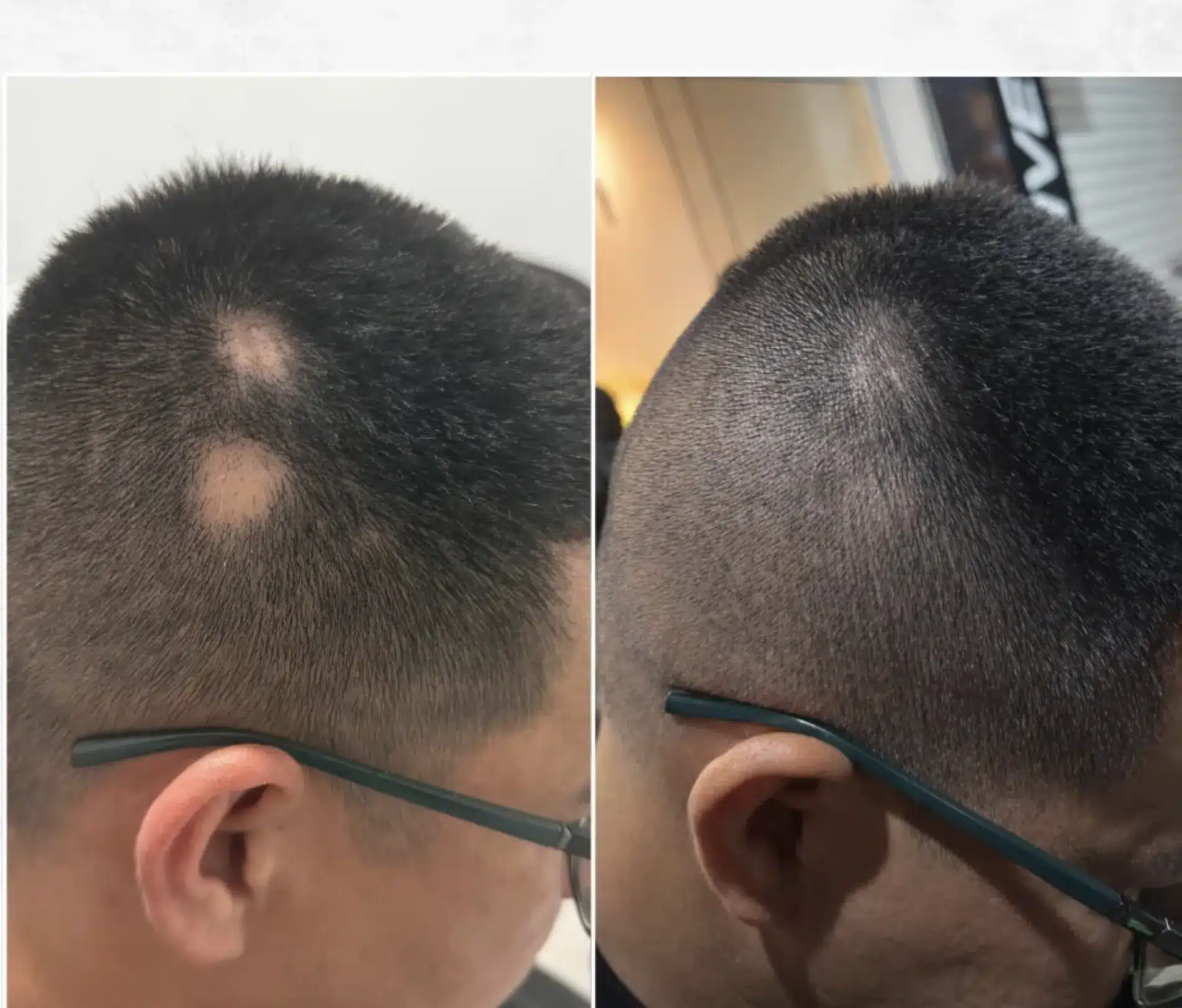
This is an autoimmune condition that’s not uncommon – it starts with sudden circular bald patches, often with telltale exclamation-point hairs around the edges. The immune system goes rogue and starts attacking the hair follicle, which is a real mess. This can be a mild issue or a more serious one, with hair loss spreading.
Illness, stress, low iron or vitamin D levels, or hormonal changes can all trigger this. When your body thinks too many hairs are in ‘standby’ at once, it starts shedding them in clumps all over the scalp – it can be alarming.
This is what happens when you pull on your hair too much – tight braids, ponytails, extensions, or even picking at your hair too much can all contribute to this one. If you catch it early, regrowth is possible, but if it continues for too long, you may develop scarring alopecia.
Conditions such as discoid lupus erythematosus and frontal fibrosing alopecia fall into this category. You often need a scalp biopsy to confirm the diagnosis. These conditions are significant because they can permanently damage hair follicles if left untreated.
In extreme cases, some clients choose cosmetic treatments to address hair loss. We often discuss scalp micropigmentation, which can help simulate a full head of hair in thin areas.

When we do a consult here at our cosmetic tattoo clinic, we use a simple set of rules to guess what might be going on:
Living in Brisbane and dealing with our humidity isn’t helping things – the extra sweat and oil from your scalp can make things a lot worse. Not the cause of alopecia, but it can certainly make things more annoying.
Hair grows in phases — and disruptions to this cycle are the foundation of every alopecia condition.
| Hair Growth Phase | What Happens | Typical Percentage of Hairs |
|---|---|---|
| Anagen | Active growth | 80–90% |
| Catagen | Transition phase | 1% |
| Telogen | Rest/shedding | 10–20% |
In telogen effluvium, an awful lot of follicles suddenly move out of the anagen phase and into the telogen phase. In androgenetic alopecia, the anagen phase shortens, and hair follicles become thinner.
Some of our clients seeking extra comfort between treatments also ask about a hairline tattoo, which can soften the appearance of thinning areas without disrupting the natural hair cycle.

By understanding how these factors interact, our clients can begin making changes that genuinely help stabilise their follicles and prevent future flare-ups.
Stress goes and disrupts the immune system, causing even more shedding. And then there’s alopecia areata – it’s basically when the immune system just attacks the follicles for no reason.
Lots of our female clients experience female pattern hair loss right around the time of peri-menopause, or when they’ve got thyroid problems or have just gone through pregnancy and all the hormonal shift that comes with that.
We often find that our clients who are losing their hair all over the place have low iron levels, or low vitamin D, or aren’t getting enough protein – all of which show up in blood tests.
There are also inflammation, infections, dermatitis, and other scalp conditions that can damage the hair shaft and halt the cycle.
One major cause of traction alopecia is excessive tension on the hair from tight hairstyles.
Most of our clients benefit from a multi-layered strategy that addresses all internal, external, and cosmetic factors affecting them.
Dermatologists often recommend:

Addressing deficiencies, reducing stress, and managing autoimmune disorders appear to improve outcomes.
It’s suitable for when you’ve got really advanced androgenetic alopecia, or female pattern baldness, where your hair follicles have permanently shrunk.
And then there are the clients who just want to get a bit more confident while they wait for the hair to grow back – so they go for some visual enhancements:
These do not treat the biological cause but can dramatically restore confidence, similar to how eyebrow tattoo services can help rebalance facial definition when hair loss affects overall appearance.
One Brisbane client arrived devastated after developing two bald patches overnight. The clinical presentation strongly suggested alopecia areata, which was later confirmed by a dermatologist. After intralesional corticosteroid injections, regrowth appeared at the eight-week mark.
Another client — a FIFO worker with chronic stress — experienced telogen effluvium. Blood tests confirmed vitamin D deficiency. With supplementation, PRP therapy, and time, density improved noticeably. During the waiting period, she explored a hairline tattoo to soften visible thinning, which boosted her confidence while regrowth took its course.
Working out what’s behind your alopecia – be it telogen effluvium, alopecia areata, androgenetic alopecia, or one of the scarring types – is the starting point for choosing the right treatment path. And if you’re not sure where to start, a little visual support from something like a scalp tattoo or scalp micropigmentation can make a big difference while your medical treatments work their magic
If you’d like to get some good, old-fashioned advice from people who know what they’re talking about – without the judgement – then Cosmetic Tattoo Studio Brisbane Face Figurati is here to help you get your head around what’s going on with your scalp and what you can do about it – because let’s face it, it’s about time you got some answers.

With industry experience since 2016, Uliana is a certified and licensed specialist who works with clients affected by different forms of alopecia, helping them understand the various types, common triggers, and available treatment paths. She holds recognised qualifications across Europe and Australia and focuses on scalp health, hair follicle behaviour, and supportive options tailored to each individual case.
Not exactly – but with the right treatment, you can manage it and even see some improvements. Just be warned, though, you’ll likely need to keep on top of it with ongoing treatment.
Not always -sometimes they do come back, though the extent to which they do will vary from person to person.
Absolutely – checking your iron, vitamin D, thyroid, and autoimmune markers can be a huge help in working out what’s going on and what’s causing it.
Yes, and it might be particularly useful for women with stable female-pattern hair loss.
The key here is to get in early with your dermatologist and get some treatment going – because the sooner you can stop the follicle damage, the better.